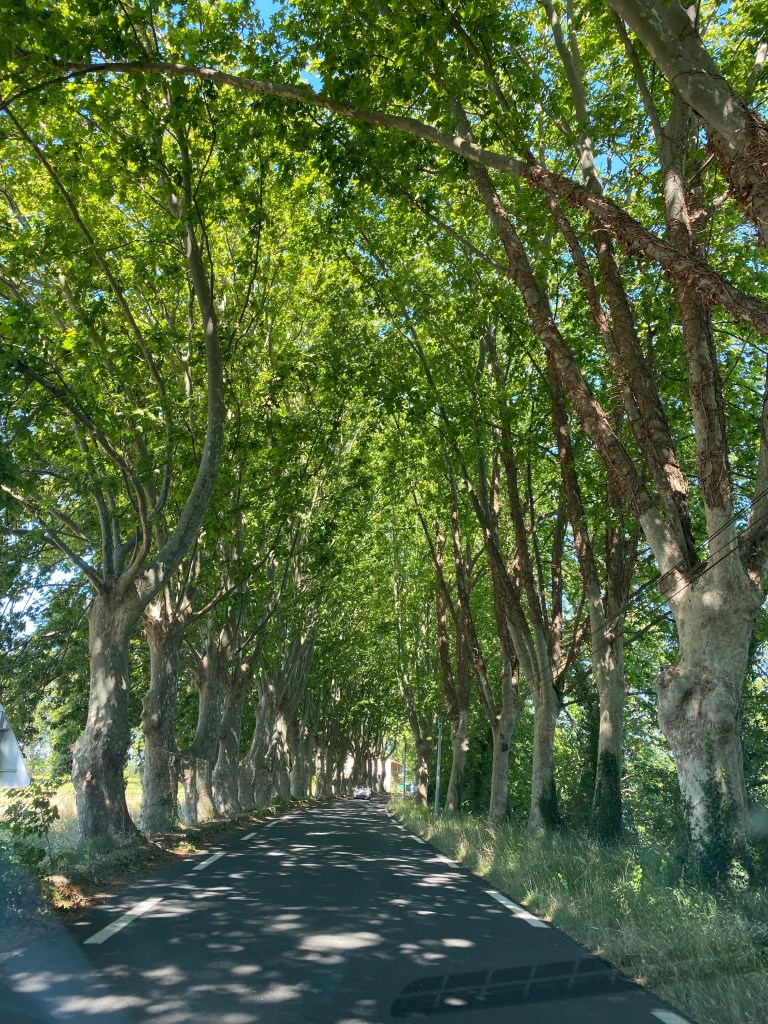
Plane trees—the quintessential symbol of Provence—ordered by Napoleon to shade his marching troops
Soon we start home to be with grandson Charlie on his fourth birthday. It’s just a pause in our planned year of travel in francophone countries and we’ll be back as soon as the French Embassy issues our long-stay visas. As you can imagine, there is so much we haven’t said. Every ordinary thing we do is an experience, often a challenge, and sometimes a dead-end.
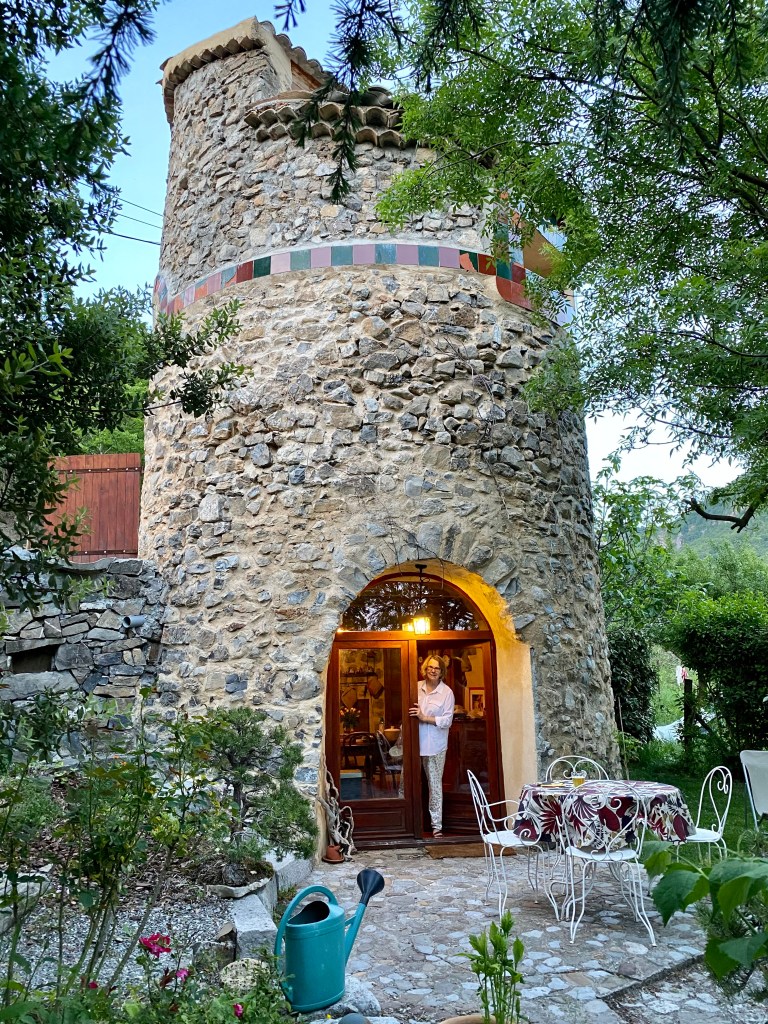
All it took for us to launch another adventure was Thérèse’s suggestion that Sisteron, a town located in the foothills of the Alpes, is worth exploring. Renie found a wonderfully quirky gite—an ancient stone pigeon tower, Le Pigeonnier de Mon Père—in Chateaufort, a tiny isolated village thirteen kilometers of narrow, winding roads from Sisteron.
Le Pigeonnier de Mon Père
In the Middle Ages, owning a dovecote was a sign of wealth since the birds were a source of meat and the excrement was valued as fertilizer and as an ingredient in gunpowder. At the time of construction, pigeon holes made of wood, wicker, or pottery or hewn into the rock walls lined the interior from top to bottom. Every pigeonnier was built with a band of protruding rock or slippery tile near the roof to prevent rats and other predators from poaching its prey.
 Travel in Le Troisième Âge