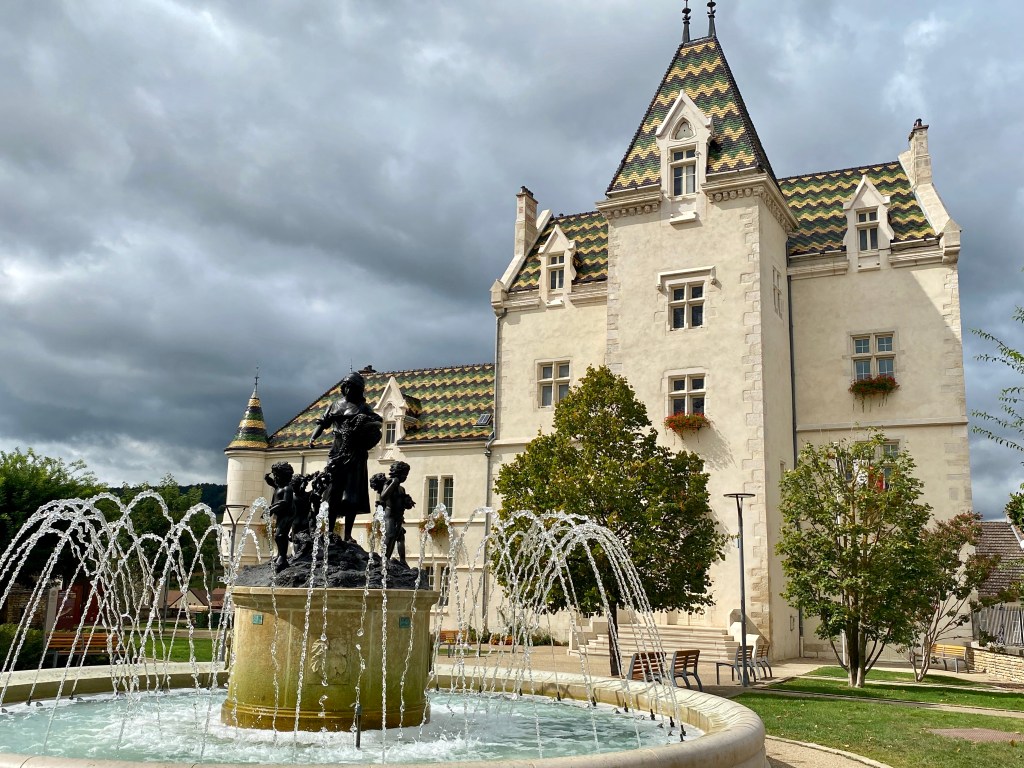
In France, locating a suitable gite to rent for a week or so is kind of like buying a pig in a poke. First we conduct an exhaustive search on the internet then plunge into the sea of choices and grab one. The guardian angel of “le troisième age” often looks after us and we usually end up with a great place. La Cour Vincent in Bligny-sur-Beaune was one of those and it came with a bonus — the gracious and elegant owners M. and Mme. Duréault.
We were captivated by Mme Rosier, the vivacious,energetic, fig and peach-preserves-making-octogenarian-proprietor of our gîte in the Dordogne
Since leaving Switzerland on August 30 and arriving in Flanders Fields on October 9 (See entry dated Oct. 14), the time we spent in interesting places and with precious family and dear friends trumped any efforts to stay in touch. The details of our stays in 13 different hotels and gites in 40 days would exhaust even our most ardent followers, but by moving around so often, we were able to sate our curiosity about certain new places and satisfy our desire to revisit others.
In the silence and darkness of the early October morning, while comfortably settled in our gîte with character near the Western Front, we are hardly able to assimilate all we experienced at Flanders Fields.
Some estimate that the four years of bloody conflict resulted in one million soldiers and civilians dead, missing, or wounded in this theater alone while hardly any ground was gained on either side. We had noticed time and again through the years that the inevitable war memorial in every French town, village, and hamlet lists three or four or five times the number of casualties from the first world war as from the second.
We never knew that we needed to see the Matterhorn, but when Lucas and Simone said we did, we took their word for it and hurled ourselves down some of the scariest mountain roads yet to get to Zermatt. We blindly booked a hotel touting a view with a price that didn’t break the bank. The image above captures the vista from our private terrace.
Remember the Parisiens we mentioned in our last episode? The large number who vacated the City of Light to go on holiday in August? We caught up with almost all of them — in the French Alps, in Annecy.
Annecy old town
We booked an apartment in Annecy with only one thing in mind – air conditioning. A prudent priority since on several days the temperature exceeded 100 degrees with high humidity. Annecy is a gorgeous town full of charm situated at the northern tip of the crystal clear glacial lake of the same name only about twenty-two miles from Geneva, Switzerland. It’s a hot spot for vacationers who create a festive atmosphere and swarm the beaches, streets, parks, and bicycle/walking paths.
The waxing moon shines on Les Invalides and the Eiffel Tower
We answered the tug on our heartstrings with a five-week hiatus in the US celebrating grandson Charlie’s 4th birthday and reuniting with family and friends in LR, KC, California, and Idaho. Long-stay visas required by France finally materialized and we returned to Paris on August 1 to resume our year of living french-ly.
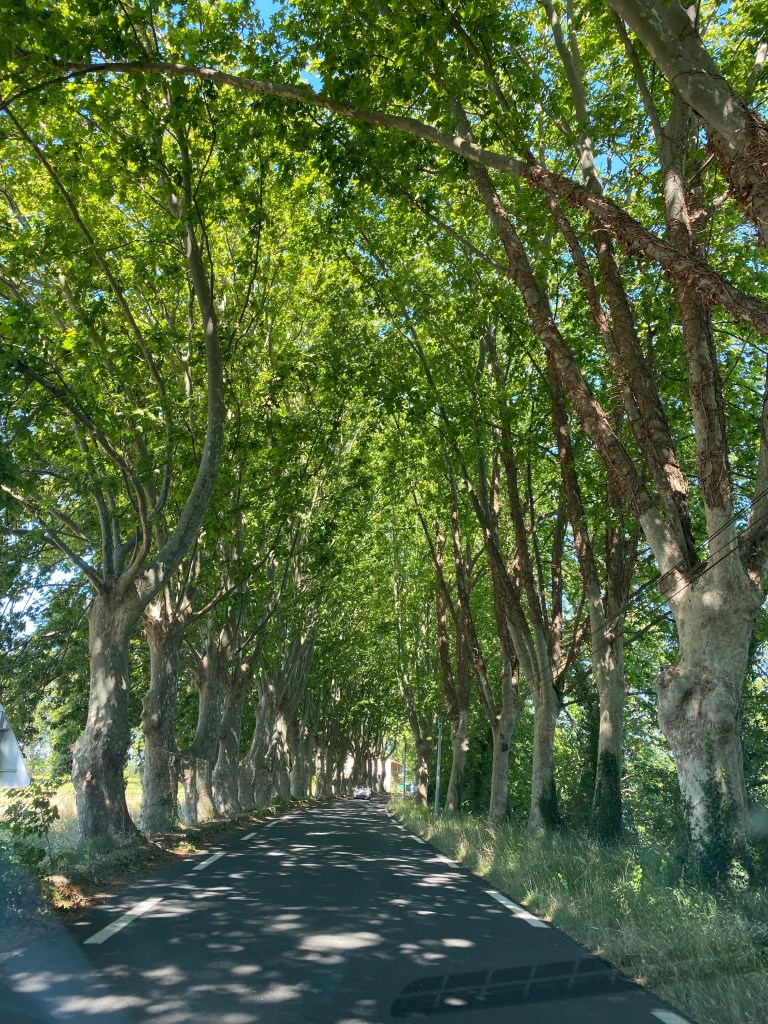
Plane trees—the quintessential symbol of Provence—ordered by Napoleon to shade his marching troops
Soon we start home to be with grandson Charlie on his fourth birthday. It’s just a pause in our planned year of travel in francophone countries and we’ll be back as soon as the French Embassy issues our long-stay visas. As you can imagine, there is so much we haven’t said. Every ordinary thing we do is an experience, often a challenge, and sometimes a dead-end.
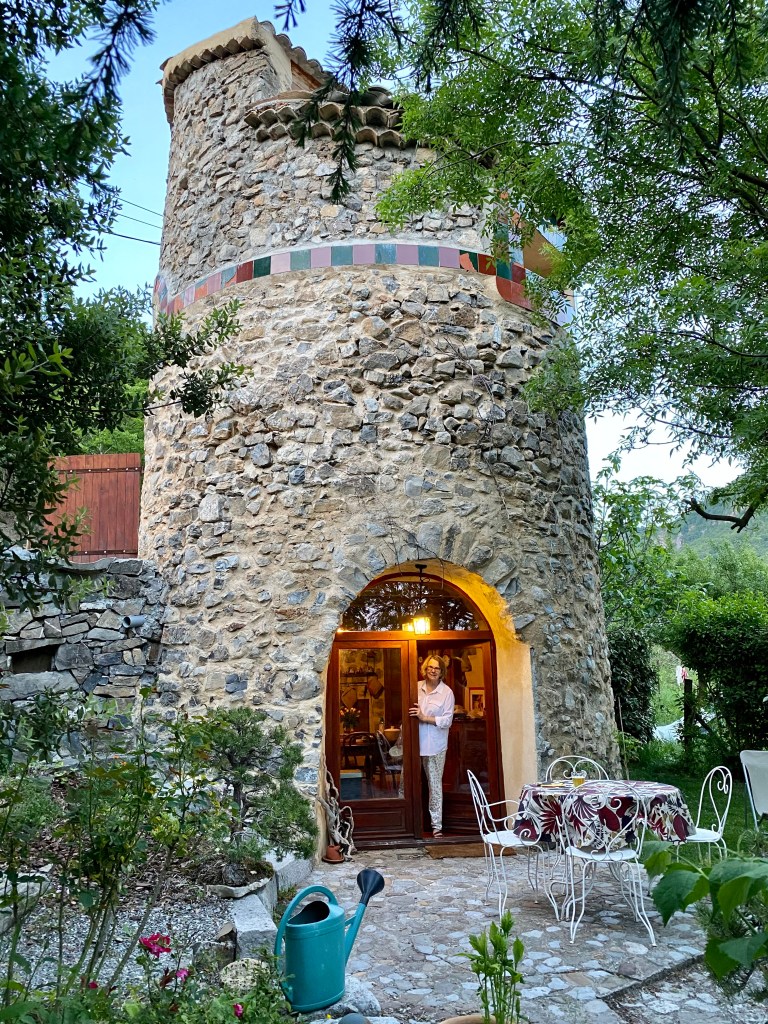
All it took for us to launch another adventure was Thérèse’s suggestion that Sisteron, a town located in the foothills of the Alpes, is worth exploring. Renie found a wonderfully quirky gite—an ancient stone pigeon tower, Le Pigeonnier de Mon Père—in Chateaufort, a tiny isolated village thirteen kilometers of narrow, winding roads from Sisteron.
Le Pigeonnier de Mon Père
In the Middle Ages, owning a dovecote was a sign of wealth since the birds were a source of meat and the excrement was valued as fertilizer and as an ingredient in gunpowder. At the time of construction, pigeon holes made of wood, wicker, or pottery or hewn into the rock walls lined the interior from top to bottom. Every pigeonnier was built with a band of protruding rock or slippery tile near the roof to prevent rats and other predators from poaching its prey.
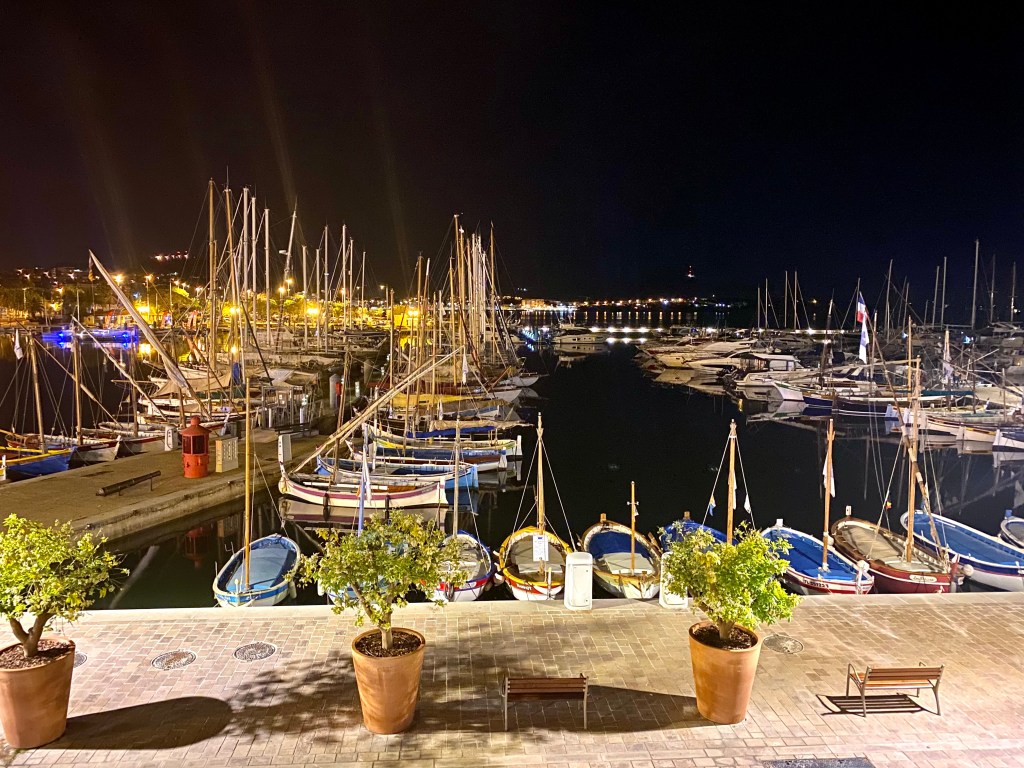
Sanary-sur-Mer harbor at midnight taken from our room
Sanary-sur-Mer is a small picturesque town thirteen kilometers from the ferry landing in Toulon. Hotel de la Tour, our home for four nights, surrounds a medieval tower built to guard the village in the 13th century. It sits at the edge of a square next to the stone boardwalk that stretches along the Mediterranean in the pedestrian-only part of town. We roused Sunday morning to the sounds of vendors setting up the Provençal market on our doorstep. As the day went on, more and more people poured into the market area—so many that it took at least one-half hour to walk from one end to the other without stopping except to pick our way through the crowd. The marketed goods seemed typical with lots of inexpensive clothing, accessories, and household items together with local fruits, vegetables, cheeses, and wines. By evening, after the town emptied of day visitors, calm and quiet returned.
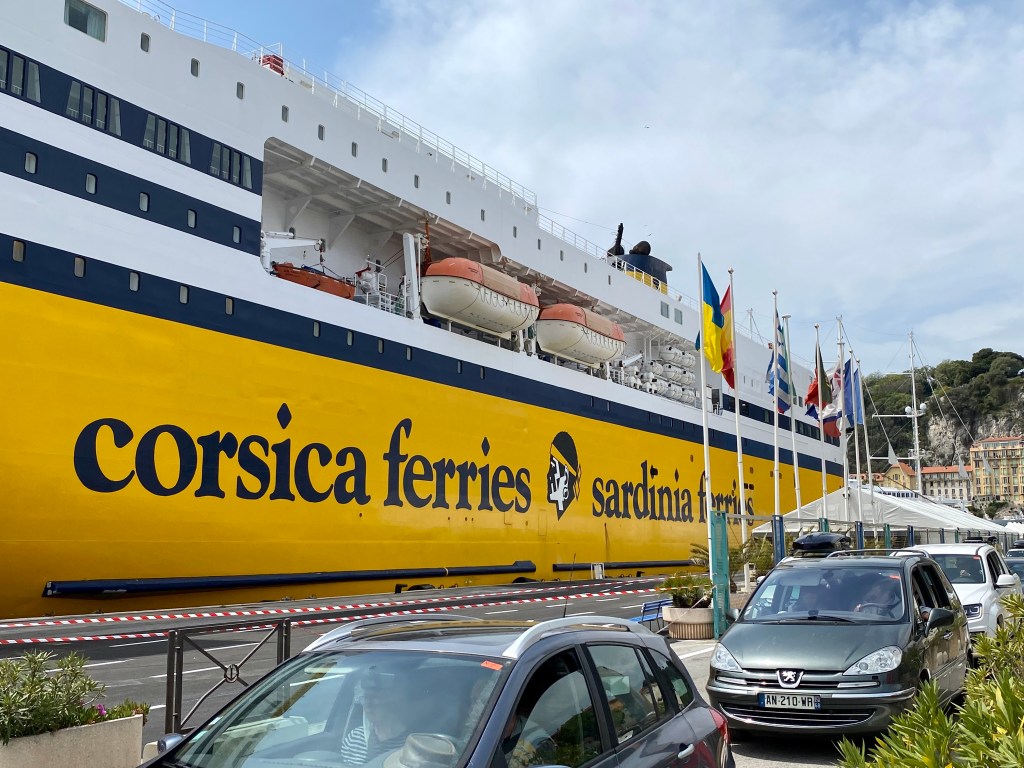
Curiosity drew us to Corsica. Although collectively we have traveled to France many times, Corsica has never been on our radar — until now. Always loving an adventure, we booked passage with Corsica Ferries for the six hour, ninety- nine mile trip over the Mediterranean Sea from Nice to Bastia. These enormous vessels carry up to 1800 passengers and 550 vehicles. We selected an outside cabin with private bath in advance and supplemented our picnic supper with beer and wine from the ship’s cave. The motion of the ship was gentle enough that we napped — like being on a train but without the clickety-clack.


 Travel in Le Troisième Âge