John McCrae, 1915

In the silence and darkness of the early October morning, while comfortably settled in our gîte with character near the Western Front, we are hardly able to assimilate all we experienced at Flanders Fields.
Some estimate that the four years of bloody conflict resulted in one million soldiers and civilians dead, missing, or wounded in this theater alone while hardly any ground was gained on either side. We had noticed time and again through the years that the inevitable war memorial in every French town, village, and hamlet lists three or four or five times the number of casualties from the first world war as from the second.
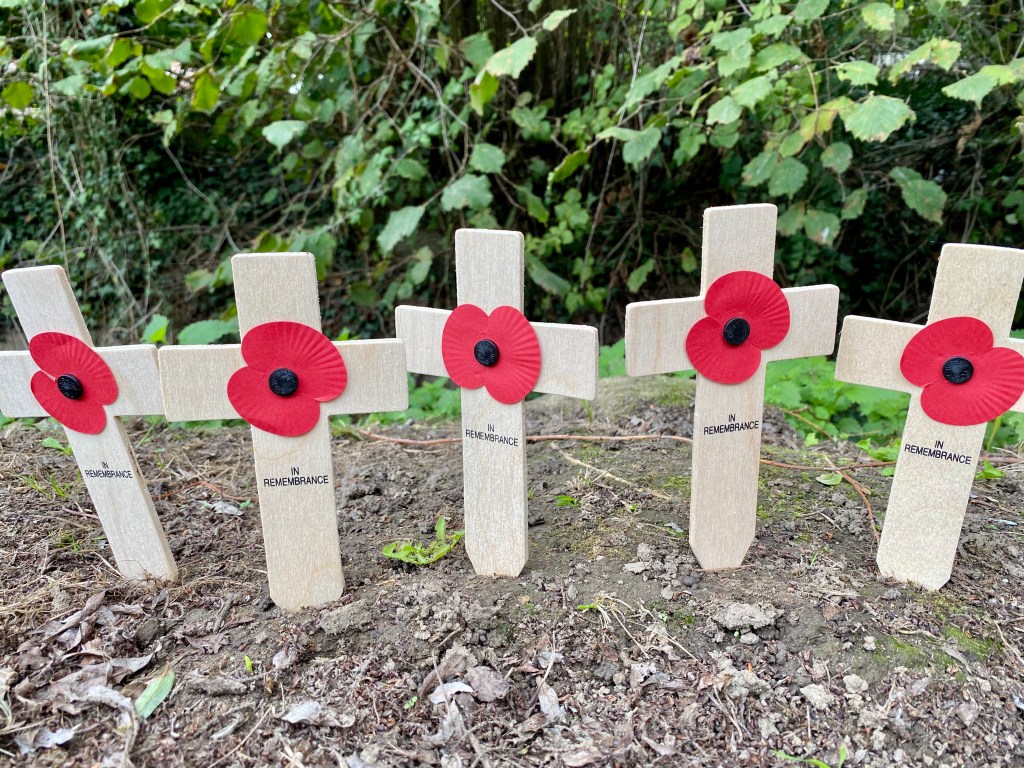
We wonder why we, American kids born in 1944, recognize the lines of John McCrae’s lament — the one he scratched out from an Allied bunker in 1915 just after officiating at the funeral of his closest friend who had been slaughtered on the battlefield. Our growing-up years were peppered with family stories about World War II, newsreel images in picture shows, and reports on radio and in Life, Time, and The Saturday Evening Post.
We knew that Renie’s dad René César Bressinck was a war refugee from his Belgium birthplace to Glasgow, Scotland, in about 1914 when he was nine years old. But for us, Flanders Fields, the collective name for all the WWI battlefields in the area, remained a mystical place where poppies must have grown in the early 20th century.
But now we know and we will never forget.

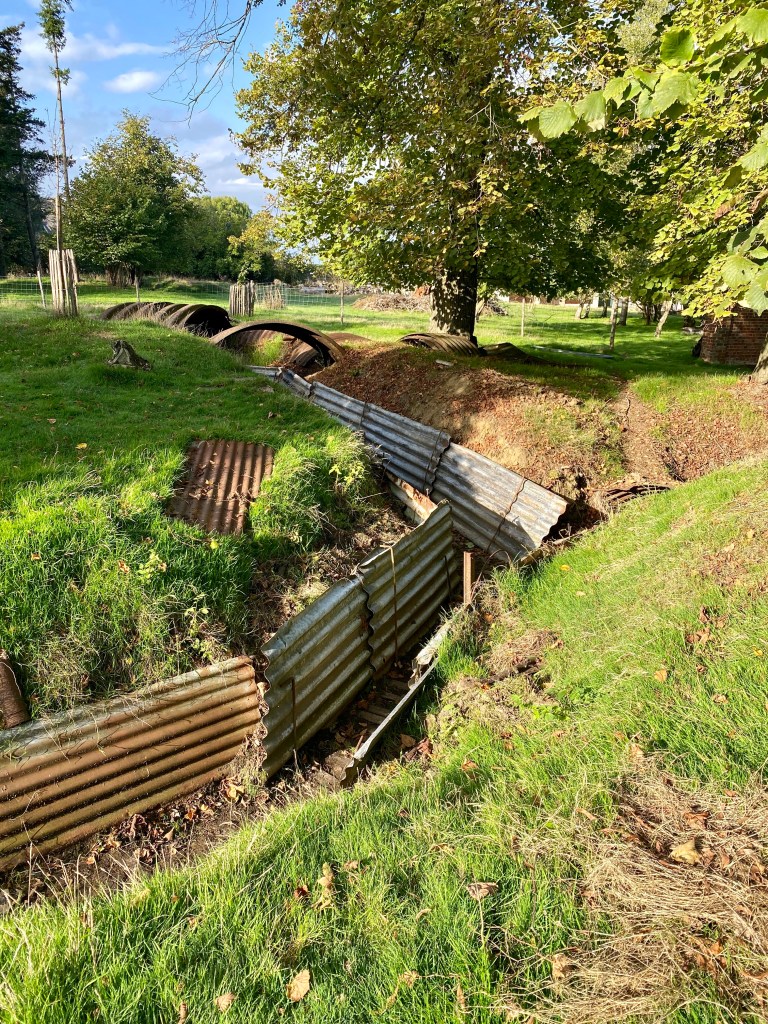
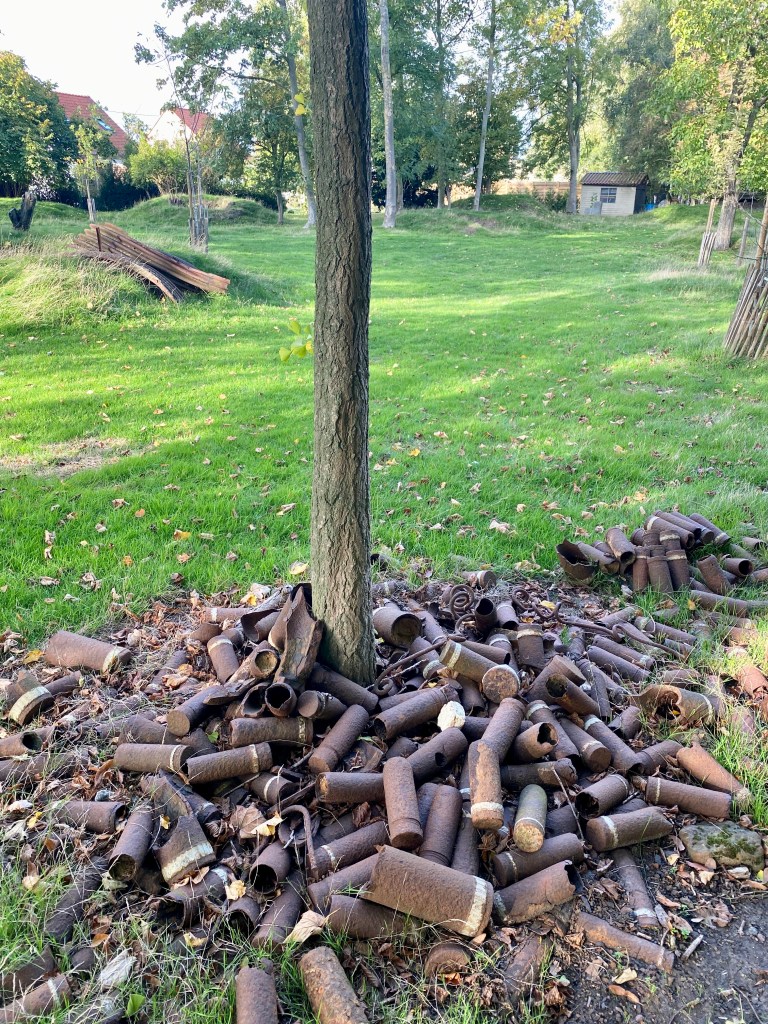
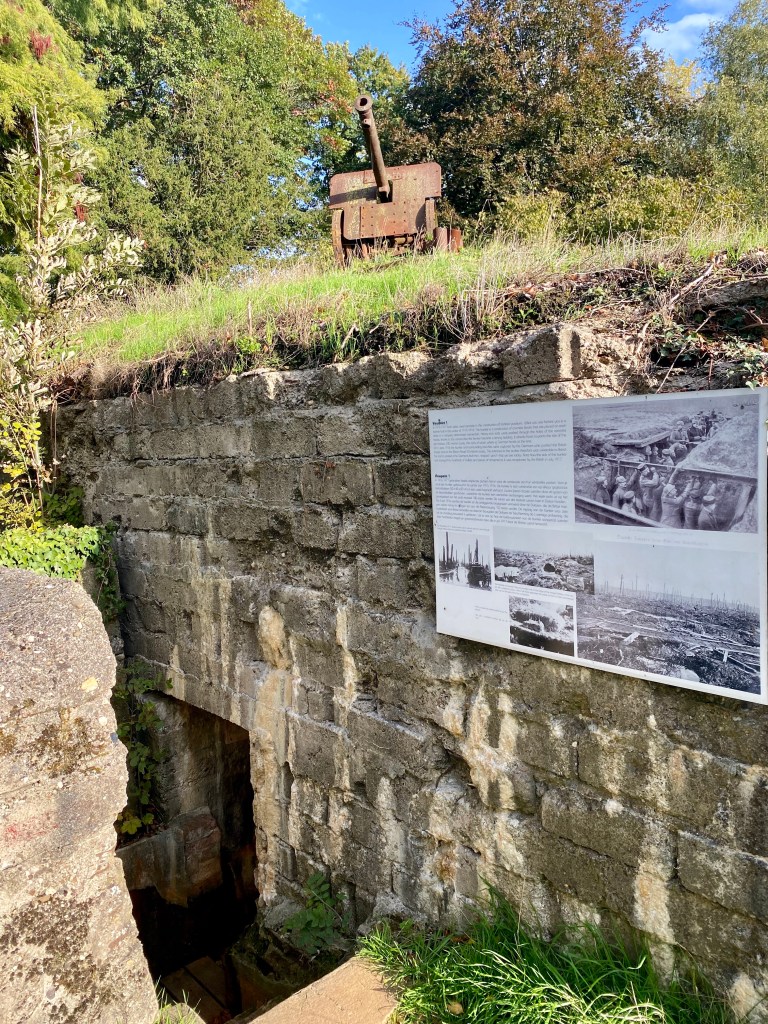
Our small hotel, located on the edge of Ypres, Belgium, where at least three grisly battles occurred, was built in the style of an English cottage after the chateau on the same land was reduced to rubble by relentless artillery fire. When the nobleman rebuilt, he left the cavernous craters and zig-zagging trenches littered with sheets of rusted metal and piles of corroded shells. The remains of an Allied bunker face those of a German one not 50 yards away and an ancient piece of artillery perches on the muddy slope. The atmosphere hangs heavy with the weight of brutality, suffering, fear, and loss.
Ypres, once a thriving medieval town, underwent absolute destruction and devastation during the war years, 1914-1918. The citizenry rebuilt its town with care and fiercely strives to ensure that the lessons of the Great War are remembered. When we visited the war museum fixed inside the Cloth Hall that was built in the 13th century, then destroyed and reconstructed in the 20th, we were content to be in the midst of adolescents actively engaged in a sort of history scavenger hunt.

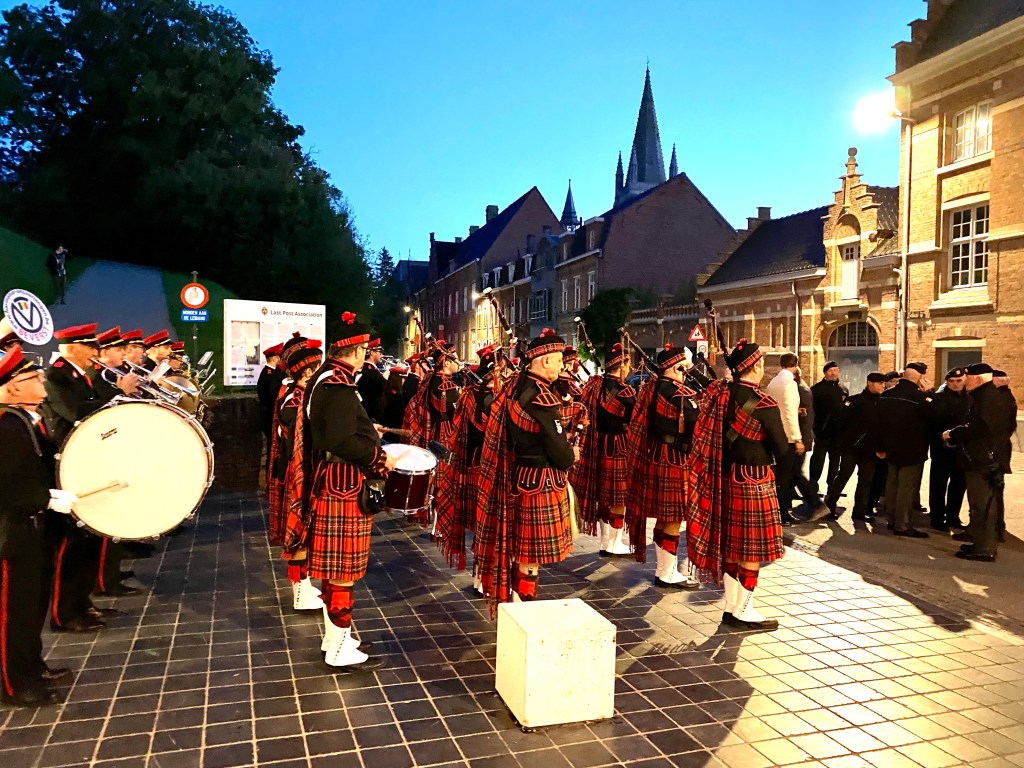
The Menin Gate serves as the portal to Ypres and every evening, since 1928, buglers have assembled to trumpet “The Last Post”, the melancholy tune played to mourn the dead and commemorate those lost in war. Some nights these volunteers stand alone. And sometimes there are bands and pipers and color guards and layers of wreaths who come from Great Britain, Australia, New Zealand, and other Commonwealth countries to register their sorrow and to remember.
The walls of the gate are inscribed with the names of 54,896 Commonwealth soldiers with no known graves. When there was no more space, 34,957 names were carved onto a second memorial nearby.
In Flanders Fields, at 78 years old, we had a sort of coming-of-age moment, finally knowing what happened but not fully understanding why . . . and wondering in renewed despair why man continues to destroy each other.
—— Renie and Diane
 Travel in Le Troisième Âge
Thanks so much for sharing this.
LikeLike
Hello Renie and Diane ,
Interesting story. I didn’t know your father was from there and I know you were excited to see that area.
The WX is turning cooler here as the the leaves are transitioning to their fall colors, right on schedule.
Looking forward to your return and maybe getting to fire this 811H up and making some contacts
Travel safe and 73,
-Harold. W5HWH
The
LikeLike
Enjoy your blogs so much. Robin
LikeLike
What a lovely 9 and a bit melancholy ) post. Philip was happy for the phone call Renie. We miss you two!
Anne & Phil
LikeLike
My grandfather was injured in this area. He suffered from what we would now call PTSD. One of his few war stories was how he and a German soldier helped each other tend to their injuries.
Thank you for the story and pictures that increased my understanding of his experience.
Beth Johnson
LikeLike
Thank you for your thoughtful and moving post. “In Flanders Fields” is the centrepiece of our Remembrance Day ceremonies here in Canada. I cannot read it without tears welling up in my eyes.
LikeLike
Beautiful … last lines so true .. Thank you, dear cousins for taking us there so movingly .
LikeLike
Thank you so very much for the meaningful account of your WWI pilgrimage to Ypres and Flanders. I only wish I could have accompanied you to pay my respects. ChiChi has sent beautiful pics of Ghent and Aachen and was thrilled with every moment. I am so very happy for you all. FYI, I’m back in LR beginning Oct 25 and look forward to welcoming you home. Take care and enjoy these belle jours of Autumn. Rem
Sent from my iPhone
>
LikeLike
Diane. You write so well I felt I was somewhat there though the experience of actually being there I’m sure cannot be met. Yes. how tragic war is. I did not attend the reunion this year and do wonder how everone is doing. I have not been back to Little Rock other than one visit when Ann was being dischared back to her Independent Living apartment. Stayed about a week to be sure she was ok and safety measures set up. Had thought about trying for a drive this fall but they had an outbreak of COVID ( 23 cases in the facility I know of ) so scratched that plan. And I swear as I drive there that they keep moving Litttle Rock farther away. The trip seems so long when I drive it alone. Thank goodness for the telephone. I am so happy that you and Renie are having the experiences you have there in France. Hope to see you when we next can cross paths. Love,,, Brendan.
>
LikeLike
An especially poignant journey you took us on.
Our gratitude just grows for the beautiful adventures we share through you. Thank you once again for this wonderful history lesson. You would think we would learn our lessons from these wars and not let them be repeated. Sadly no. You two are fabulous! Safe travels and to good health 🥂!
LikeLike
Your words paid tribute to those fought for freedom and now lie in Flanders Field and countless unnamed graves across the land.
Reading your blog was quite moving as it should be. We so far away have no idea the sacrifices. Thank you so much for sharing.
On a much lighter note. I dined with Kay Smith at Scallions today and also had a lovely surprise visit there with Chris Allen.
Night temps necessitated turning on the heat. I scrubbed pots, repotted & brought plants indoors. Pansies and mums are nestled down in their beds at the lake and here. Gorgeous blue skies & leaves are turning colors.
We’re off to Eureka Spgs 29-31 for Zombi crawl & Halloween trick or treating. Eureka does 🎃 👻 big time.
Jo
>
LikeLike
Thank you both for that sober reminder of the enormous sacrifices made for our freedom . It is all too easy for us to forget, as the current strife in our world attests. Your account was so beautifully written.
I’m sure you know that your friend, and our neighbor, Jane, is back home but not doing well. We hope you’ll come see us when you come to visit her.
A bientôt !
LikeLike
Such a beautifully written description of your wonderful experience. Thank you for sharing.
Love to you both,
Sandra & Bob
LikeLike