Although we intended to limit our travels to French-speaking countries, since after all we came with the goal to improve our hard-earned, French-speaking ability, we couldn’t resist a few deviations.
Biarritz is only about eleven miles from the Spanish border and the great Cathedral of Santiago de Compostela is “only” about 440 miles from there — about the same distance as from LR to KC. Rejecting the usual options of walking, cycling, and horseback, we chose to complete our camino by car.

Driving in a foreign country tires us out more than covering the same distance at home so Renie identified what we hoped would be a quaint fishing village positioned a little more than half way along the route.
Cudillero, reminiscent of the villages of Cinque Terre in northwestern Italy, is small, quaint, and quiet, at least in March. Its residents must be some of the kindest, most cheerful people on earth. Colorful perched houses with many windows outlined in red – Basque style – nestle close together and cascade over the mountainside in tiers down to the tiny port. Our simple dinner of tapas eaten among the locals was just right.
The scenery in Spain is spectacular, especially along the coast. As in France, however, the highways pass interminably through fields barren in March. Listening to a recording of “Don Quixote” relieved our inevitable boredom during long drives and led us to ponder questions of idealism and nobility. (We’re almost embarrassed to reveal that we’re on our 4th volume of “Harry Potter”.)
Santiago and the Way of St. James (Chemin de Saint-Jacques)
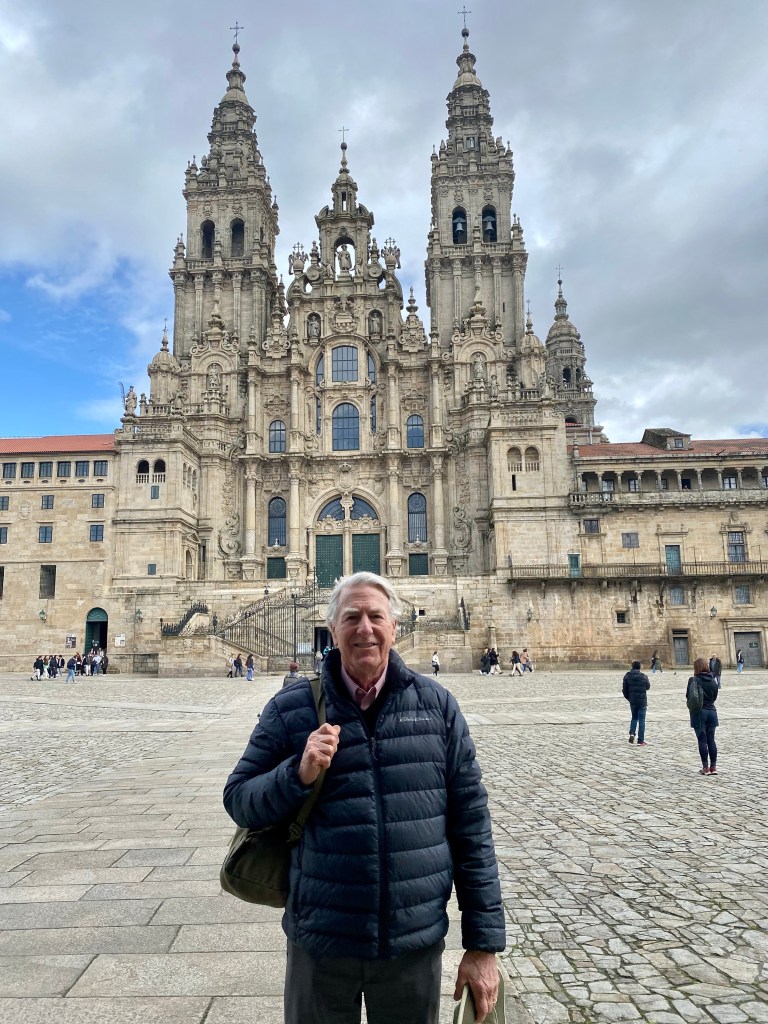
Legend bolstered by tradition and passionate belief support that the remains of the apostle Saint James are buried in a vault in the Cathedral of Santiago de Compostela. Since the tenth century, the Way of St. James has been a major pilgrimage route of Christians who travel its path for weeks or months, depending on their starting point.

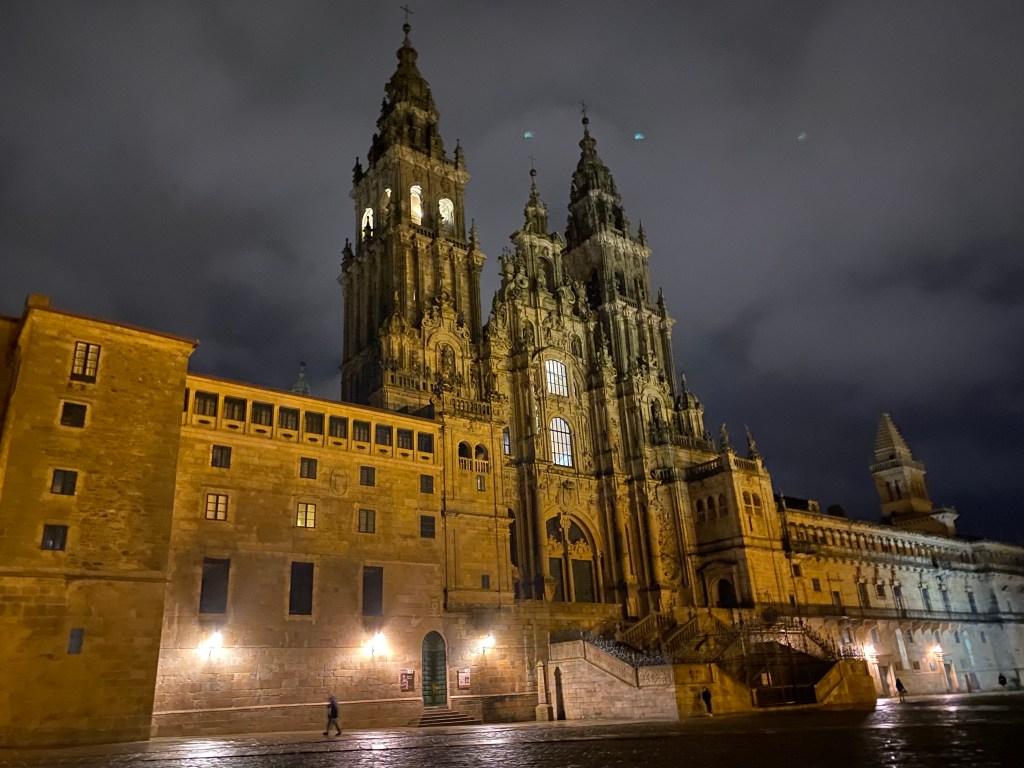
The construction of the cathedral was begun in 1075, completed in 1211, altered and embellished during the Renaissance and Baroque periods, added to during the Neoclassical period, with alterations continuing today.

Pilgrims might undertake the journey as an act of homage, penance, supplication, devotion, retreat from daily life, sport, or just because. Some set out from their home: others from popular starting points across Europe. Records in the Santiago archives indicate that in 2019, almost 350,000 pilgrims completed enough of the Way to receive an official certificate of accomplishment.

The scallop shell is the symbol of this pilgrimage: the emblem is painted on signposts, engraved on stones, and embedded in walkways to indicate the route.

Early in the 20th century, the Spanish government created a system of hotels to promote tourism and save its historic buildings. A Parador might be housed in a medieval monastery, Arab fortress, Renaissance palace, or even in the crater of an extinct volcano. Each unique lodging is held to a high standard of decor, service, and cleanliness.
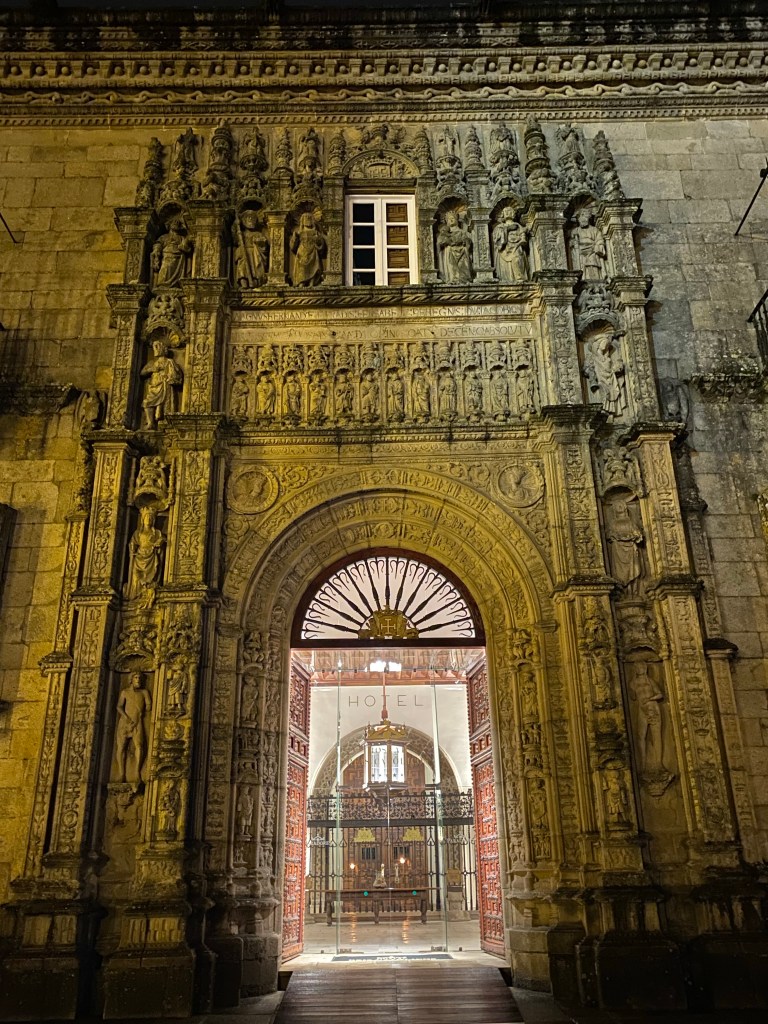
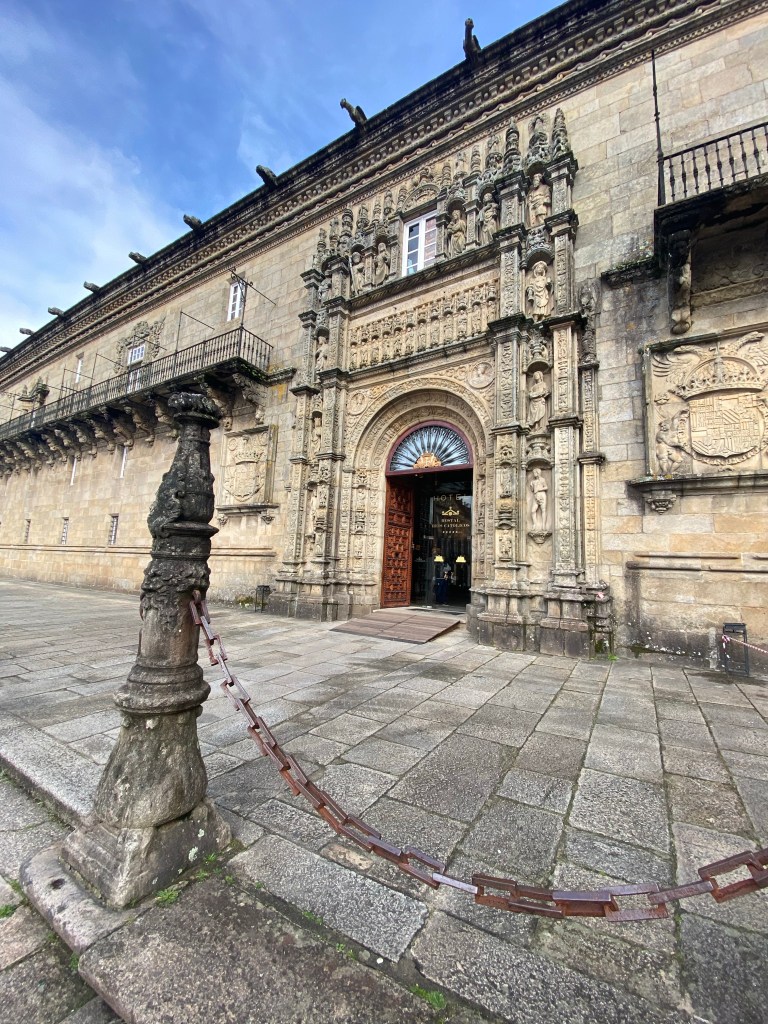
The elegant Parador of Santiago de Compostela is considered to be one of the oldest hotels in the world. Built as a royal hospital in 1499 to minister to pilgrims it forms the north side of the Praza do Obradoiro. Our three-night stay gave us time to enjoy museums and restaurants in the old town and visit and revisit the magnificent cathedral where we struggled to keep from gaping at the splendor.
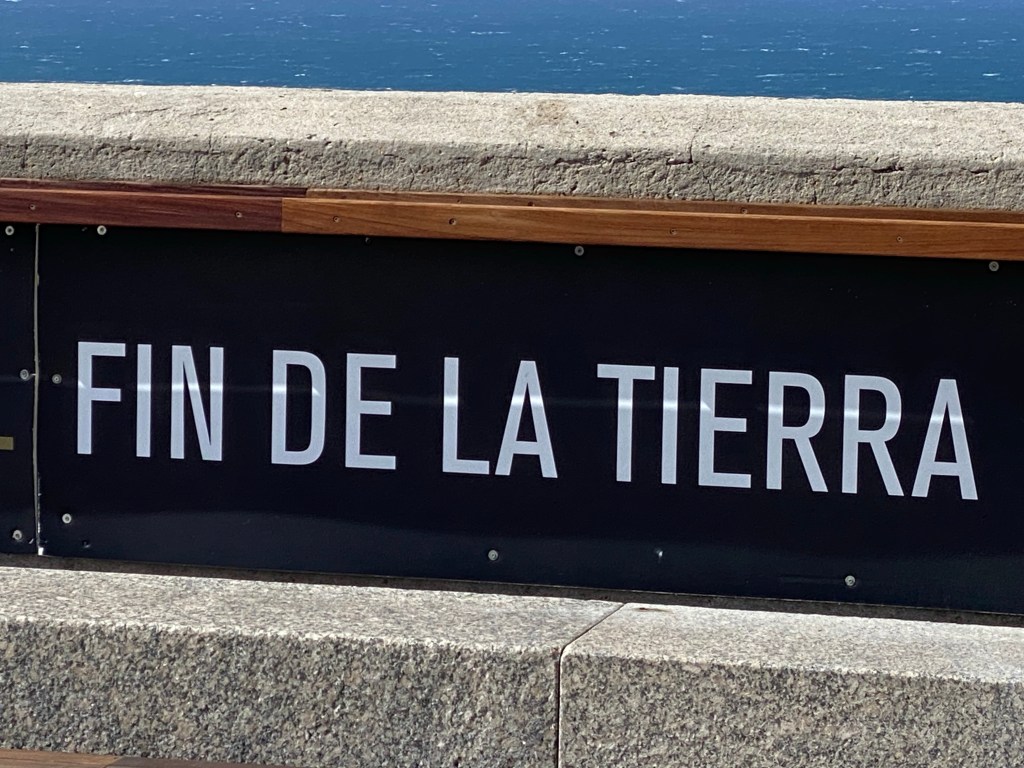
The Romans, thinking that a rocky peninsula located 55 miles west of Santiago was literally the end of the earth, named it Finisterre. On the day we visited, the wind was clocked at 45 miles per hour, so strong that one man had to chase his little girl down the ramp as she was swept along.


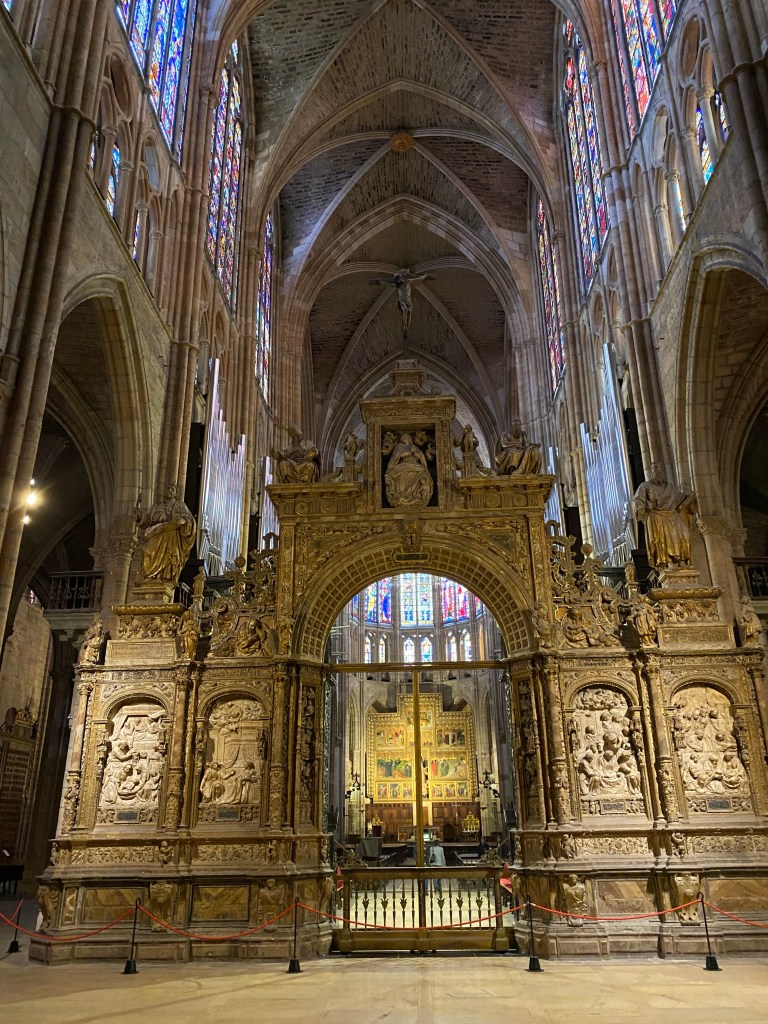
Although several interesting Spanish towns are within striking distance, we were anxious to return to France. An overnight in the exquisite Parador of Léon was the perfect segue.
We ended at the beginning — Saint-Jean-Pied-de-Port — gateway to the Camino Frances, the French Way, the most famous route to Santiago de Compostela.

Cobbled medieval streets meandering through the tiny 12th century village are lined with tall houses. Inscriptions carved into stone lintels long ago commemorate marriages intended to last forever.


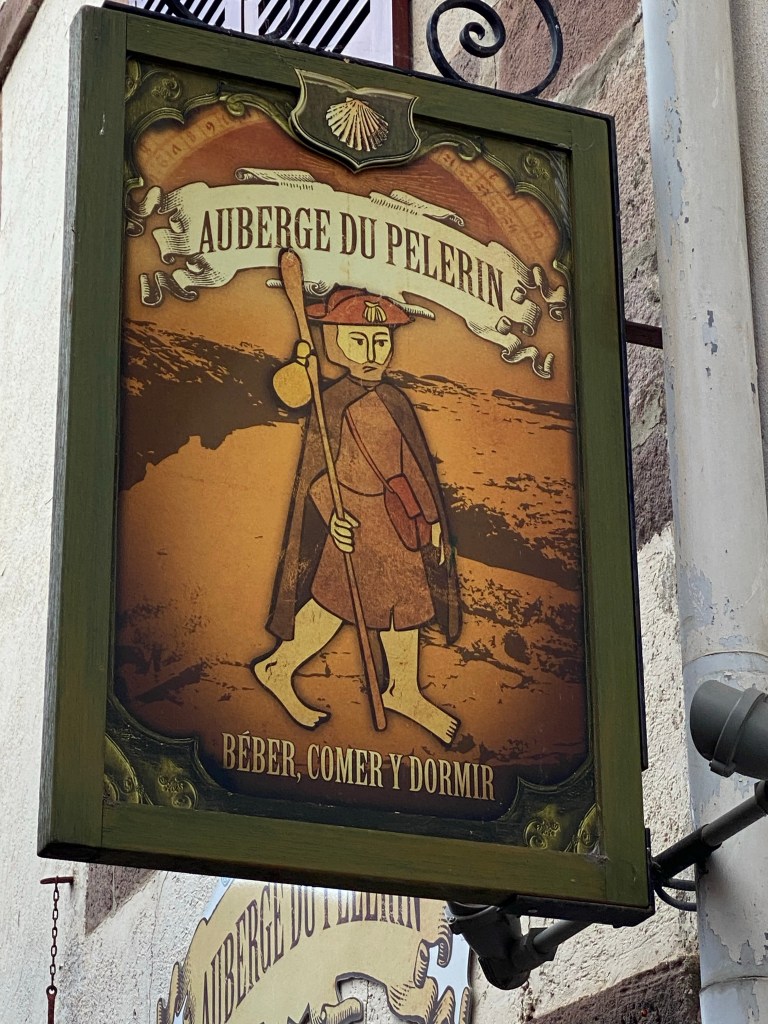
The six days we devoted to learning about the Way of Saint James, driving along one of its most popular routes, and seeing brave souls walking their personal comino as others have done for more than a thousand years inspires us and reminds us of the restorative power of simple acts performed with an open heart.
— Renie and Diane
 Travel in Le Troisième Âge
Loved these photos and vistas. Our son lived in Santiago for a year. I sent these to him! I loved Spain and regret never being back. Lee
LikeLike
Thanks, Mom, for sending. Yes, I know Santiago well! We’re travelling to Portugal this summer and plan to visit Santiago for a couple of days. I will see one of my old roommates, too. So glad you all have had such a wonderful experience!
LikeLike
Beautiful photos and descriptions.
LikeLike
We loved the parador in Santiago as well! We took the cathedral roof tour. Hope you saw the cathedral in Burgos on your way to France.
LikeLike
The cathedrals are breathtaking! Loved reading the history and learning about the personal journeys of so many. What an incredible side trip!
Love to you both,
Sandra & Bob
LikeLike
It just all gets better & better.
<
div>The cathedral looks magnificent. I can’t believe you did “the Way” your way. It all looks so beautiful. Once aga
LikeLike
It seems I forgot to hit Comment and just replied…
<
div>Sorry
Sent from my iPhone
<
div dir=”ltr”>
<
blockquote type=”cite”>
LikeLike
Renie and Diane, I open your blog like unwrapping an exciting gift. I DO hope you will collect and print these (with photos!), so we vicarious travelers may continue to relive your adventures. You feed the soul!
LikeLike
Wonderful descriptions… Forever memories. Love y’all!
Thanks,Diane Lyons(501) 352-7589
<
div dir=”ltr”>
<
blockquote type=”cite”>
LikeLike
Wow!! Beautiful photos,
Thank you for sharing.
Tell Dr B . I say hola. Xoxo
LikeLike