That was my reaction when Renie returned from attending Sunday Mass in Paris at Saint Pierre de Gros-Caillou in August of last year. As he spoke, he handed me the bulletin announcing a trip to the Holy Land planned by the parish and scheduled to depart from Paris in April, 2023.
Renie enthusiastically explained that this eight-day trip would allow us to be immersed in the French language (the primary language of the other twenty-nine travelers) while engaged in the exploration of iconic sites that we’d heard about all our lives. A sort of multitasking I guess.
Even though I never knew that I wanted to go to the Holy Land, I agreed, realizing that even though I might not understand much of the French, I already knew the stories and would love to meet French fellow pilgrims. Plus I knew very little about current-day Israel except for the frequent reports of terroristic acts that had begun to seem like business-as-usual. So we went.
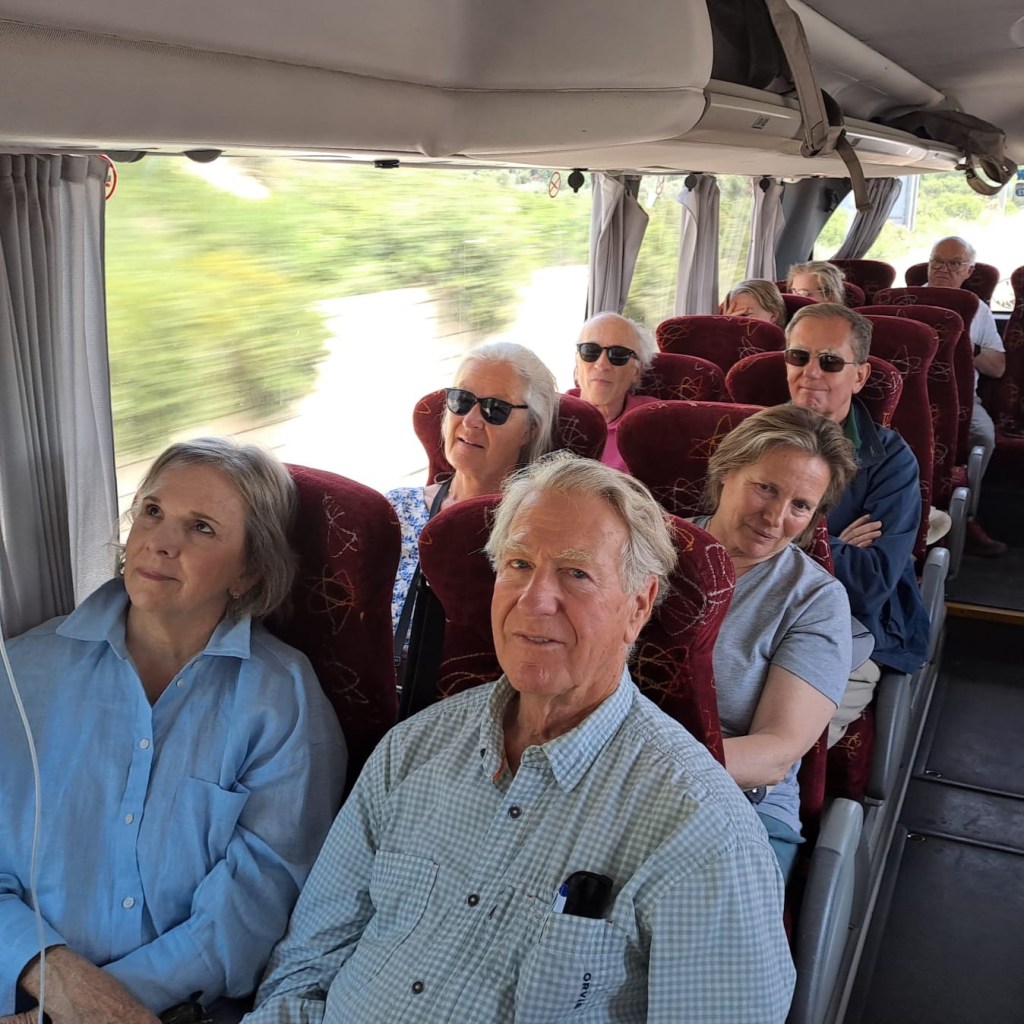
After landing in Tel Aviv on April 30, we boarded our bus and drove east across Israel to begin the latest adventure.
We couldn’t begin to chronicle all we saw and did so we’ll let our photos tell the story together with a few words provided for context. Although very few of the holiest sites in Israel can be identified with absolute certainty as being what they claim, tradition, history, and archeological research abound to affirm their verity.
As we drove south through the Negev desert, we paused at Avdat, the site of a ruined city dating from the 3rd century BC. Caravans traveling the road between Gaza and Petra camped at this oasis. After Petra, it was the largest settlement along the Spice Route.Father Jacques de Longeaux distributes Holy Communion at Avdat during our first Mass celebrated together.
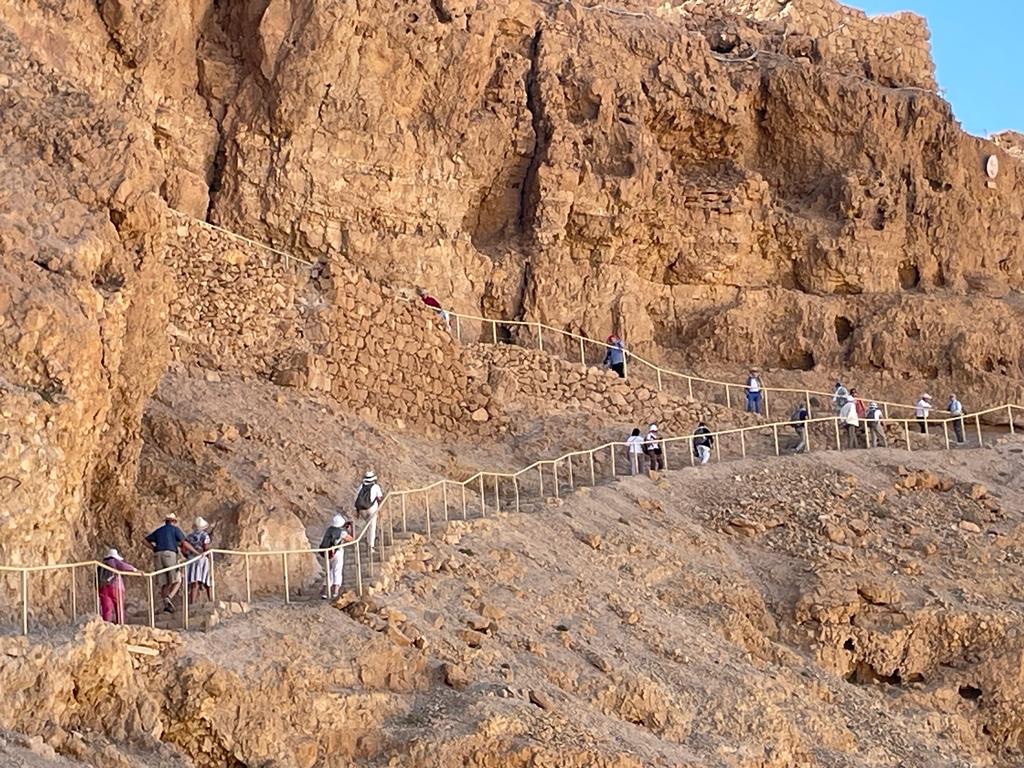
Masada, which dominates the isolated mountaintop overlooking the Dead Sea, is renowned for the palaces and fortifications engineered by Herod the Great, King of Judea from 37 to 4 BC, and for the resistance by the Jewish inhabitants to the Roman siege in 72 -73 AD. The Romans, capitalizing on an existing mound to build a massive assault ramp, hauled a battering ram to the summit and breached the Jewish defenses.
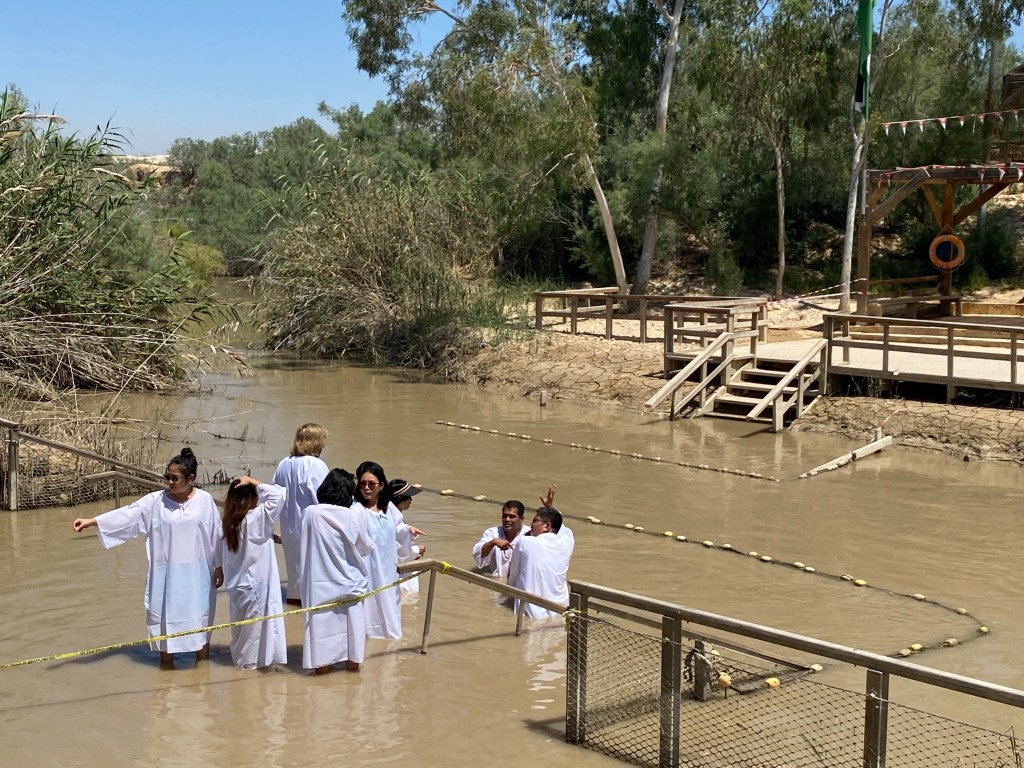
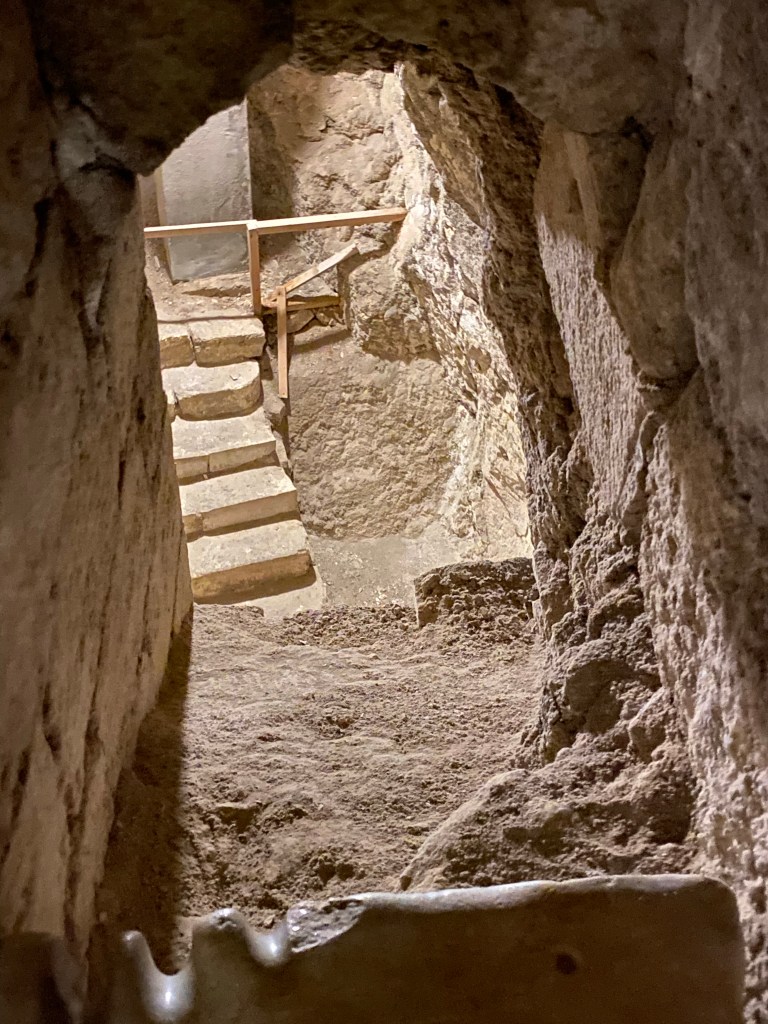
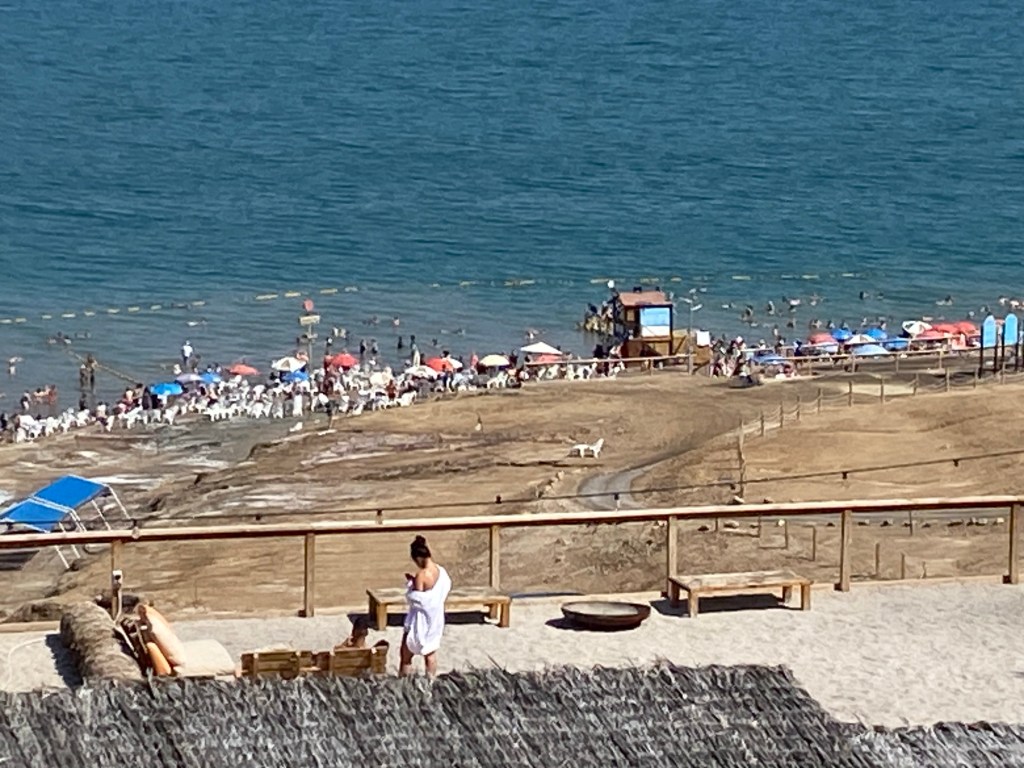
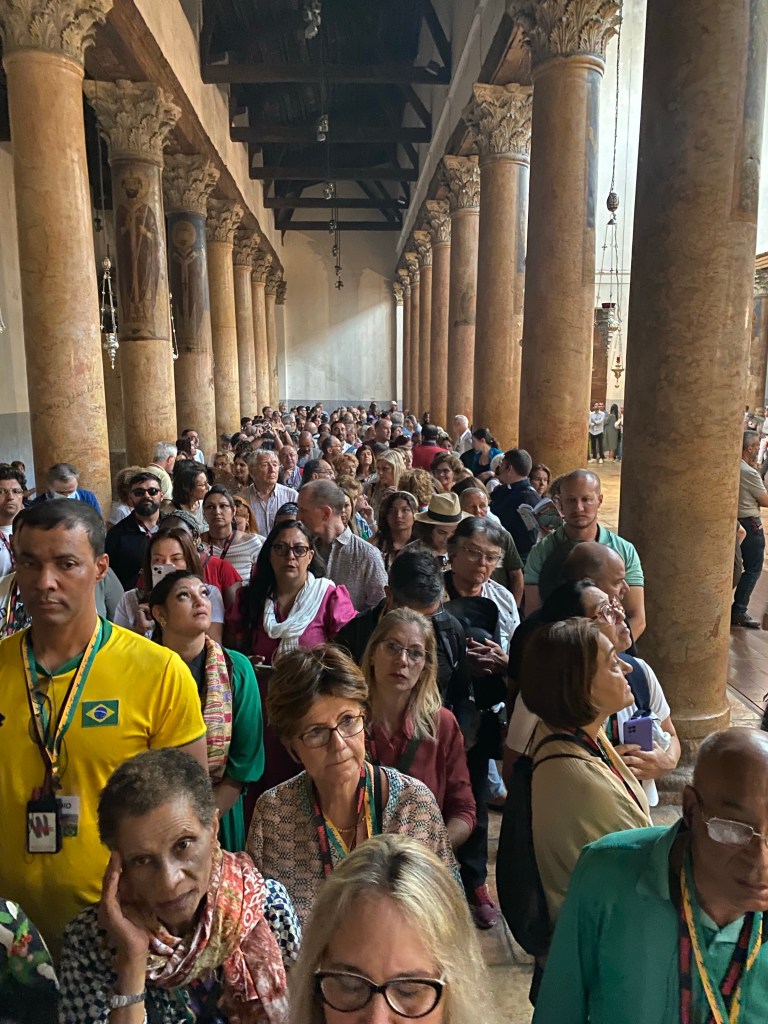
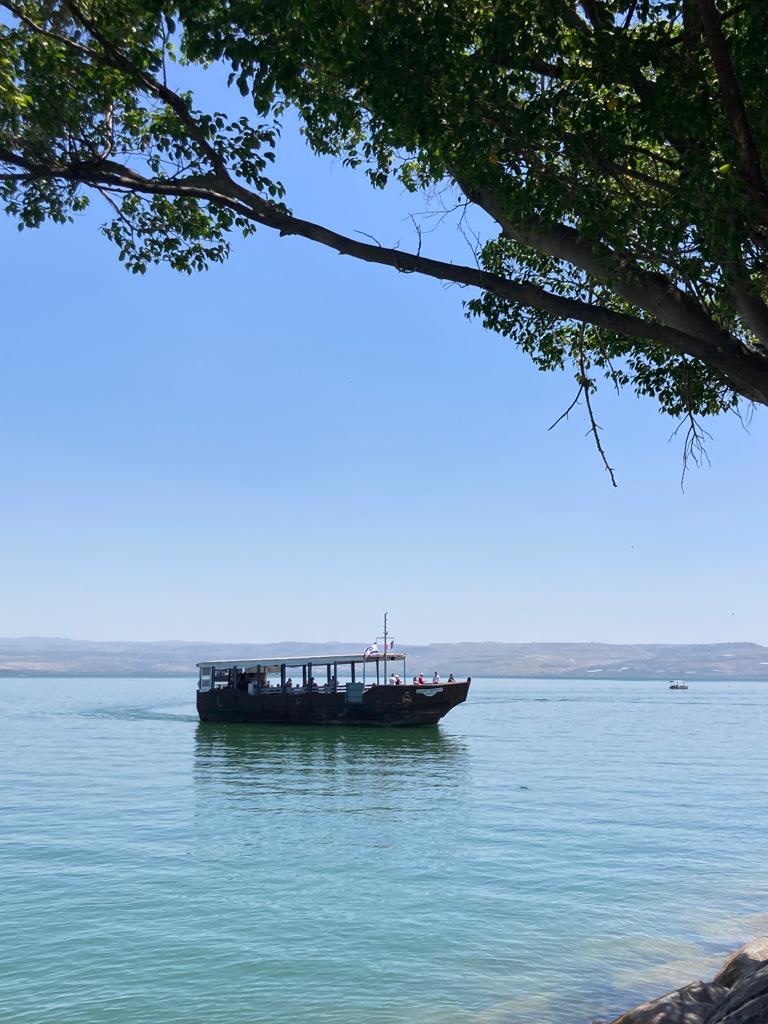
Except for the kindness and encouragement of fellow pilgrim, Catherine, Diane would have fled back to the bus.It’s a long way up . . . and a long way down.For some tourists, being baptized in the River Jordan is a highlight. Nearby armed Israeli solders eye Jordanian police across the narrow expanse of muddy water.Revered as the place of the Annunciation—where an angel announced to Mary that she would be the mother of Jesus and Mary answered with the beautiful words of the Magnificat.Father Jacques enriches our understanding with frequent pauses punctuated with inspirational biblical reflections.Archeologists confirm that this stone dwelling, which was unearthed in Nazareth, could have been Jesus’ childhood home.Where’s Renie? Swimming in the Dead Sea. In the past, some sufferers found relief from psoriasis and eczema by bathing in this water with its salinity measuring 33.7% — almost ten times saltier than the usual seawater.Crowds endure a two-hour wait in Bethlehem to see the site identified by Christian tradition since the 2nd century as the birthplace of Jesus.Underneath splendid marble ornamented with silver and adorned by golden lanterns and colorful icons lies the simple birthplace of Jesus.A calm day on the Sea of Galilee, unlike the stormy night a terrified Peter woke Jesus to plead with him to subdue a violent squall.At the edge of the Sea of Galilee, Father Jacques raises the chalice during Mass at the Consecration.
Mosaics on the floor of the Byzantine church built in the 5th century around the stone purported to be “the stone on which the Lord placed the bread” memorialize Jesus’ miraculous feeding of the multitude. His act of multiplying five loaves of bread and two fish into enough food for more than five thousand people (with baskets left over) is the only miracle of Jesus that is recorded by all four New Testament evangelists Matthew, Mark, Luke, and John.
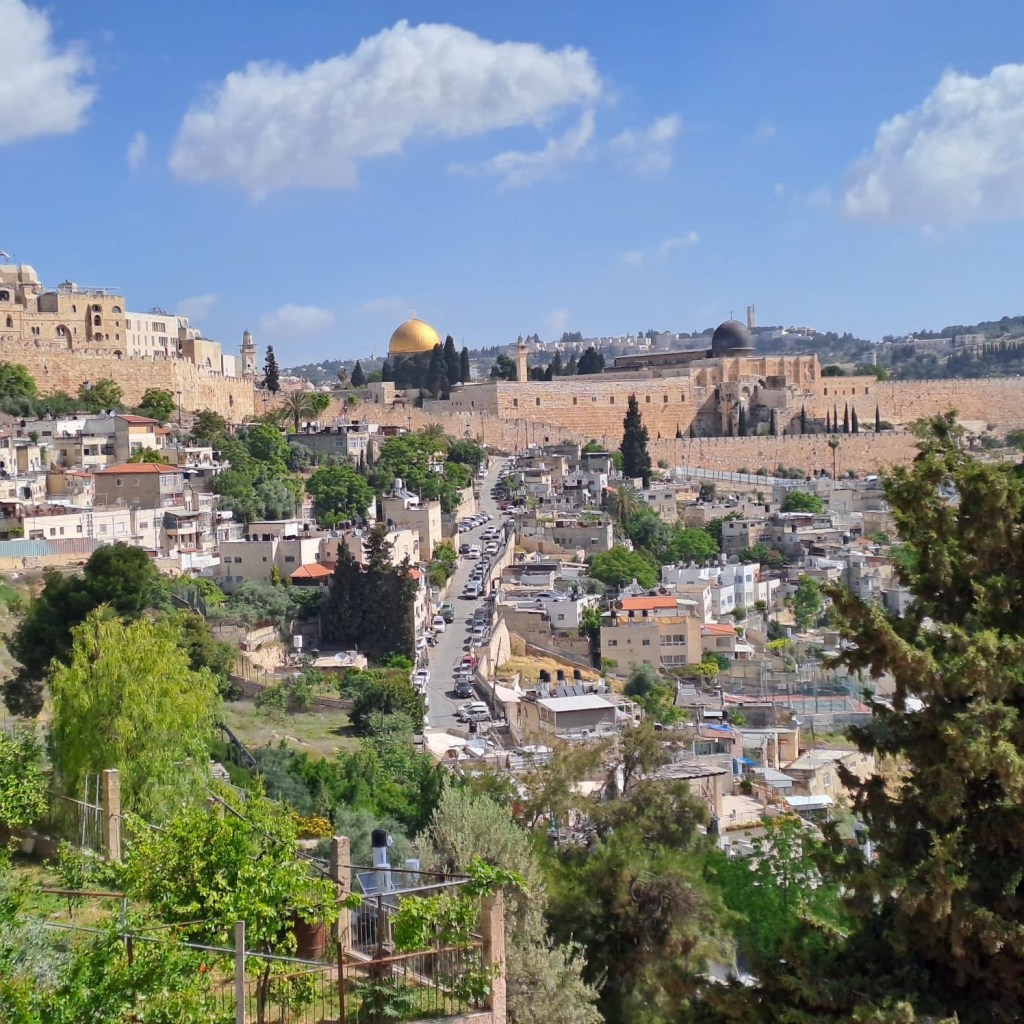
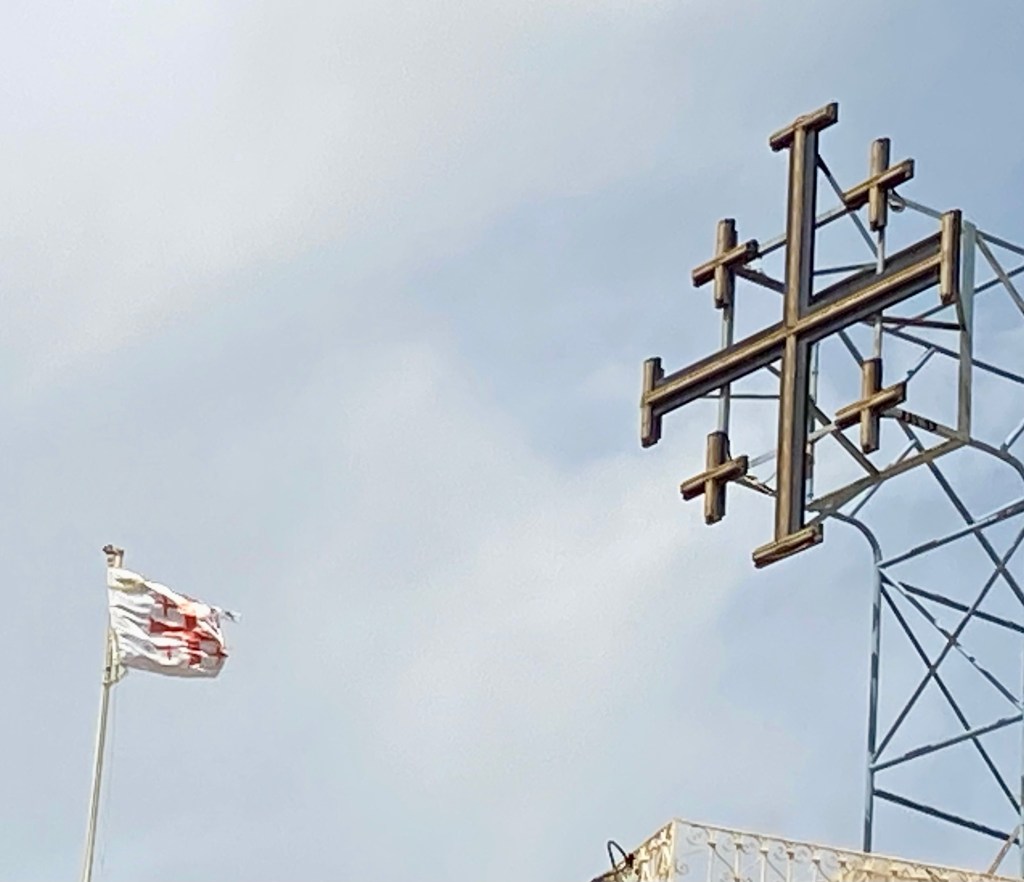
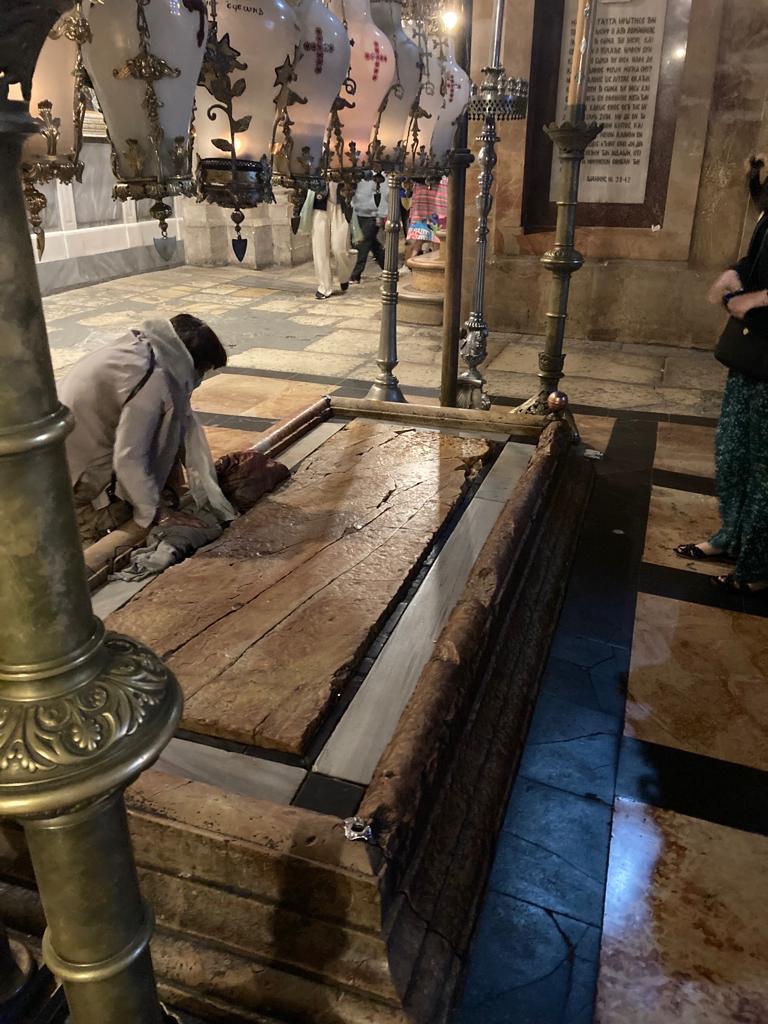
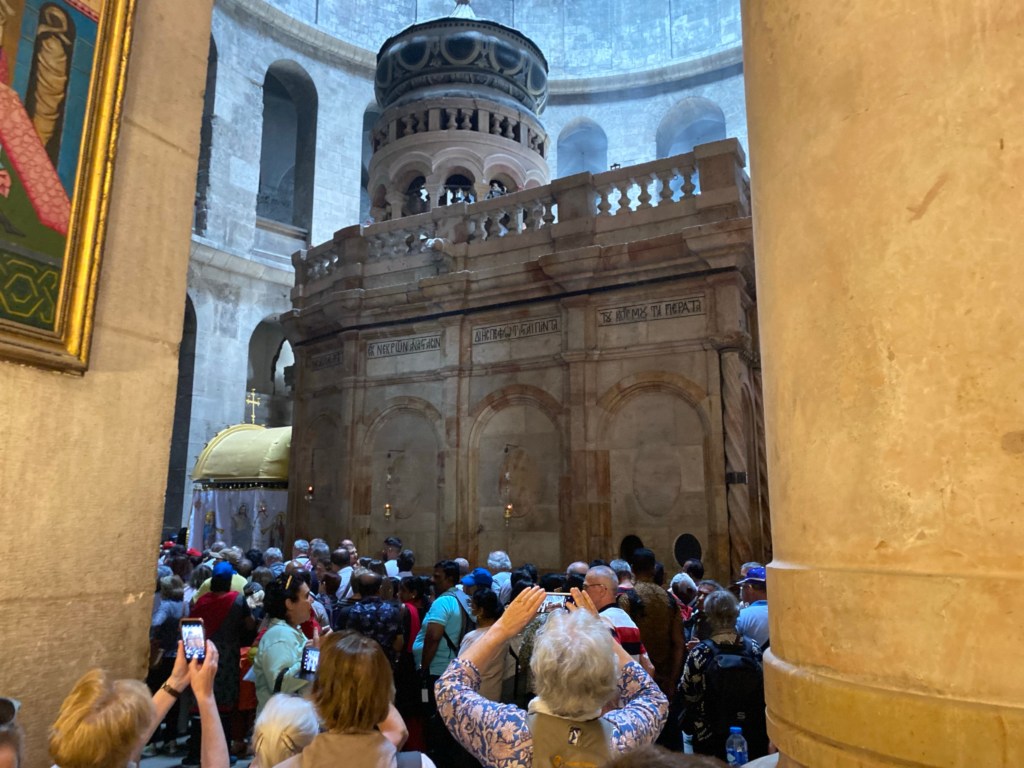
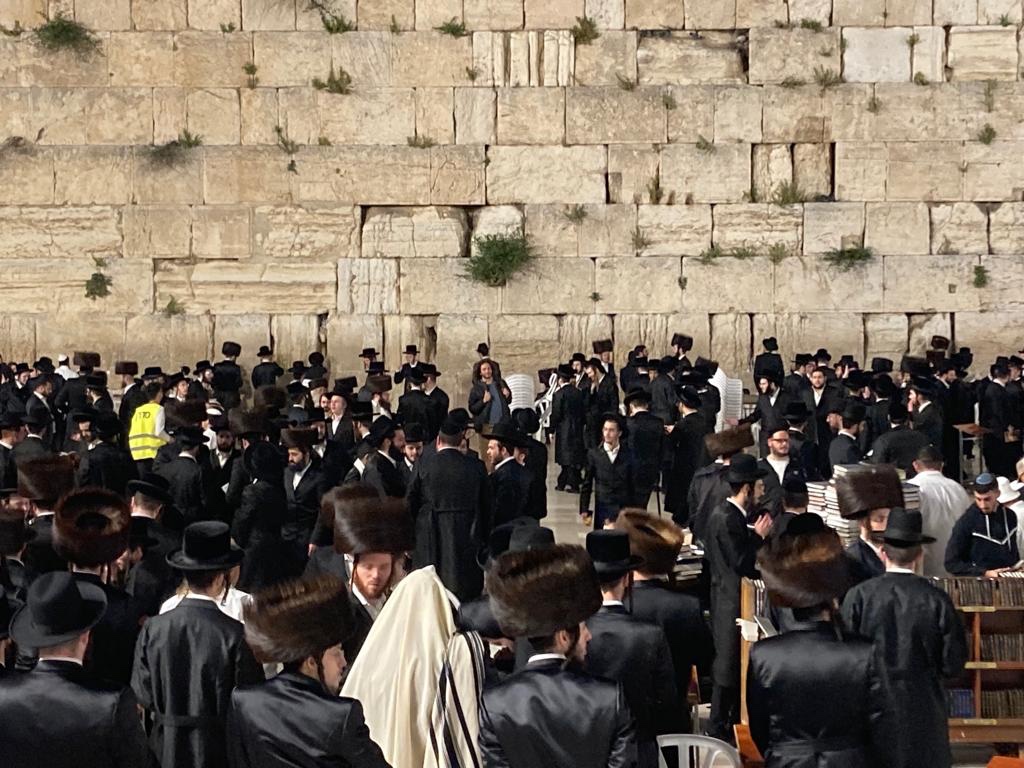
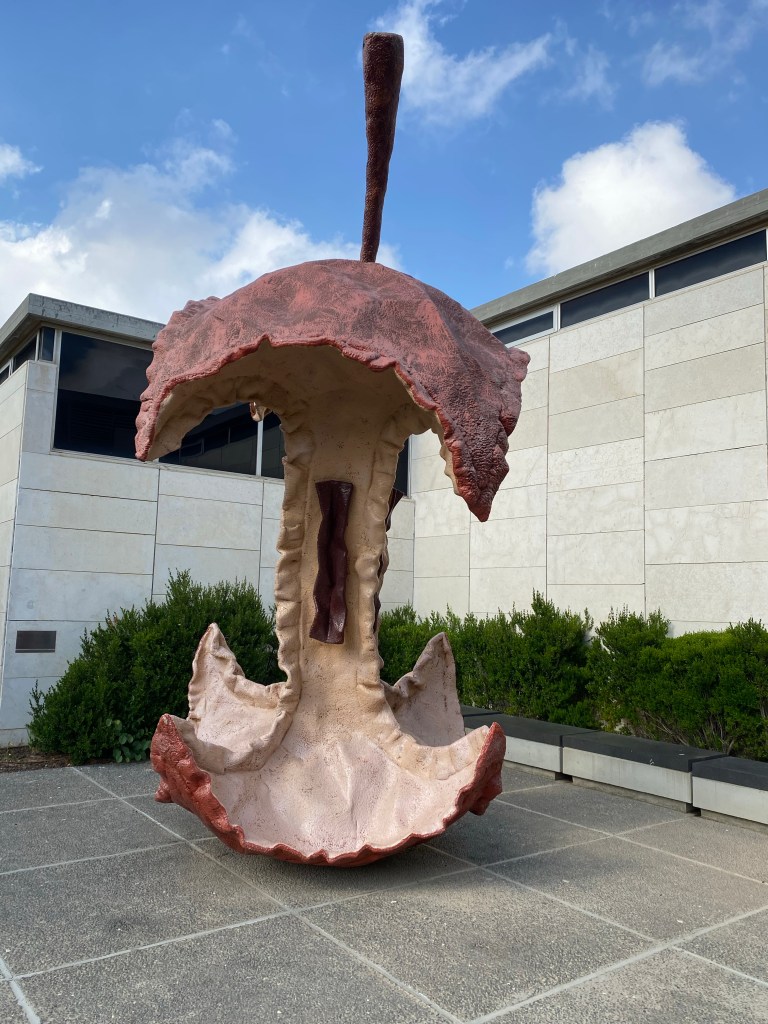
A partial view of Jerusalem, the Holy City, encompassing the Temple Mount built upon the rock where, according to legend, Abraham went to sacrifice Isaac and Mohammed ascended to heaven. The Garden of Gethsemane A Jerusalem Cross rendered in bronze and another stitched in red hover above the Church of the Holy Sepulcher.The site of the immense Church of the Holy Sepulcher, located in the Christian Quarter of the Old City, has been recognized since the 4th century as the place where Jesus was crucified, died, and rose from the dead. In about 326 AD, Constantine ordered that a church be built on this spot. The slab of rock pictured above is believed to have held Jesus’ body as it was prepared for burial.With the help of the Bishop of Jerusalem, Helena, mother of Constantine, identified a tomb carved out of surrounding rock as the place Jesus was buried. Today it is shielded in the rotunda of the sanctuary.The Western Wall (often referred to by westerners as the Wailing Wall) in the Old City dates from the 2nd century BC and is the holiest site in Judaism. As one of the last surviving walls of the site of the First and Second temples of Jerusalem, it is a place of pilgrimage and prayer. Many believers fill papers with prayers then leave them in crevices in the ancient wall.The Dead Sea Scrolls are housed in the Israel Museum, one of the leading art and archaeology museums in the world. These ancient primarily Hebrew manuscripts were found in caves on the shore of the Dead Sea in about 1947. This discovery has enabled scholars to fix the date of a stabilized Hebrew Bible to no later than 70 AD.A replica of the Dead Sea Scrolls is brilliantly displayed in the Israel Museum in Jerusalem.A cave in Qumran on the northwest shore of the Dead Sea where some of the scrolls were discovered. A discordant image I know, but upon leaving the Israel Museum, this sculpture by Claes Oldenburg shocked me out of my contemplative mood to remind me of my Kansas City home. The giant shuttlecocks at the KC Nelson-Atkins Museum of Art that playfully rest on the lawn are also the work of Oldenburg — with his wife Coosje van Bruggen.
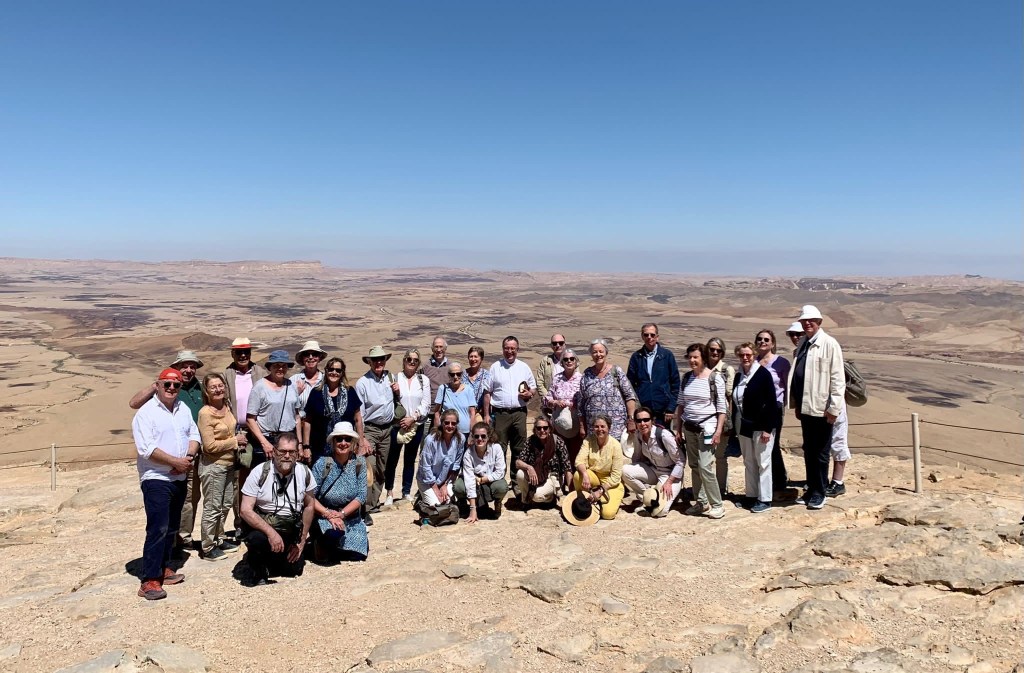
Our memories of traipsing through the deserts and flower-laden green belts of the Holy Land with our new friends will stay with us always. What a congenial group: no one was tardy; no one fussed; and no one delayed our forays by asking ridiculous questions. Every person was kind, inclusive, and good natured. One would think that we were all friendly acquaintances beforehand, yet only about one-half of the participants are members of Saint Pierre de Gros-Caillou.
Beatrice with her exceptionally beautiful singing voice and Charlotte whose expertly played notes reverberated from her flute into the caves and alcoves where Mass was celebrated enhanced the spiritual atmosphere as only music can do.
That Gros-Caillou translates into Big Rock was not lost on us since Little Rock’s Big Rock, first discovered by French explorers in the 16th century and initially named French Rock as they claimed the territory for France, is a 200 foot bluff on the north bank of the Arkansas River that we enjoy seeing every day from the terrace of our LR home.
Most outstanding was our pilgrimage-priest leader Pere Jacques whose piety, reverence, vast knowledge of the Old and New Testaments, and ability to breathe life into the Biblical stories he told imbued our Holy Land trek with depth and meaning.
Thank you, Pere Jacques, for being such a good and learned priest.
So proud of you two. What you did would be what we called a “Road Trip” in college where we, totally on the spur of the moment, got in the car and headed out somewhere with little or no preparation. These always turned out great and it appears that your road trip did the same!!!
Thank you for all the wonderful adventures we have been able to share through photos and Diane ‘s beautiful descriptions. We miss you both and are ready for you to come home. I know you will have more to share in person. But what a wonderful year! Sending love.
Your photos and explanations are just amazing.
It was wonderful “touring” along with you. Such amazing history there. Thank you for all of it!
You’re both incredible. Love! Vicki
Loved your pics and journaling about the Holy Land! Burton and I made a similar trip to all those amazing places last November. I remember saying it would be nice to have a priest or minister leading our group. The site where Jesus preached the Beatitudes overlooking Sea of Galilee was very powerful for me but then seeing all the sites of Jesus life and sacrifice was a dream of my lifetime. So appreciate seeing through your eyes again🙏
Diane… Run from him. Where does he get these ideas? Certainly it sounds like a wonderful opportunity… My gosh tall long hot and you guys aren’t spring chickens. Come home soon please.
Encore un voyage fascinant … et une bonne occasion pour developper votre francais avec vos amis voyageurs.
Vos belles photos m’ont fait voyager avec vous !
A bientot.
Amitie,
Jacqueline












 Travel in Le Troisième Âge
So proud of you two. What you did would be what we called a “Road Trip” in college where we, totally on the spur of the moment, got in the car and headed out somewhere with little or no preparation. These always turned out great and it appears that your road trip did the same!!!
LikeLike
Thank you for all the wonderful adventures we have been able to share through photos and Diane ‘s beautiful descriptions. We miss you both and are ready for you to come home. I know you will have more to share in person. But what a wonderful year! Sending love.
LikeLike
You two are my spirit animals, always up for new adventures! Love following you and ready for the next installment
LikeLike
Diane & Renie-
<
div>Wh
LikeLike
Your photos and explanations are just amazing.
It was wonderful “touring” along with you. Such amazing history there. Thank you for all of it!
You’re both incredible. Love! Vicki
LikeLike
So cool!! Loved reading.
LikeLike
Loved your pics and journaling about the Holy Land! Burton and I made a similar trip to all those amazing places last November. I remember saying it would be nice to have a priest or minister leading our group. The site where Jesus preached the Beatitudes overlooking Sea of Galilee was very powerful for me but then seeing all the sites of Jesus life and sacrifice was a dream of my lifetime. So appreciate seeing through your eyes again🙏
LikeLike
Diane… Run from him. Where does he get these ideas? Certainly it sounds like a wonderful opportunity… My gosh tall long hot and you guys aren’t spring chickens. Come home soon please.
LikeLike
Encore un voyage fascinant … et une bonne occasion pour developper votre francais avec vos amis voyageurs.
Vos belles photos m’ont fait voyager avec vous !
A bientot.
Amitie,
Jacqueline
LikeLike
Where are y’all going to turn up next!!!I loved seeing the holy land through your pictures and comments. I don’t think I could keep up with you two!
LikeLike
Dear Diane and Renie,
A beautifully written and fascinating holy land experience for all of us. Thank you for sharing!
<
div dir=”ltr”>B
LikeLike
Loved this post! Wonderful pictures! We visited some of the sights you saw many many years ago. Fascinating!
We’re now enjoying Hawaii. Tomorrow is Zac’s graduation then party party party! We return to Chester on May 30th.
LikeLike