Only about three weeks remained of our year-long France adventure and by going east — to the Grand-Est and into the Champagne region, Alsace-Lorraine along the eastern border, and the mountains and plains of the Vosges — we will have satisfied our urge to visit every corner. We were grateful that the journey on the fast train from Paris to Rheims (“Reims” in French) is perfectly timed to allow for a café au lait and a buttery croissant en route. Upon arriving in the capital of the Champagne region, we claimed our rented car and began to check off the three sights that we most wanted to visit.
The Surrender Room
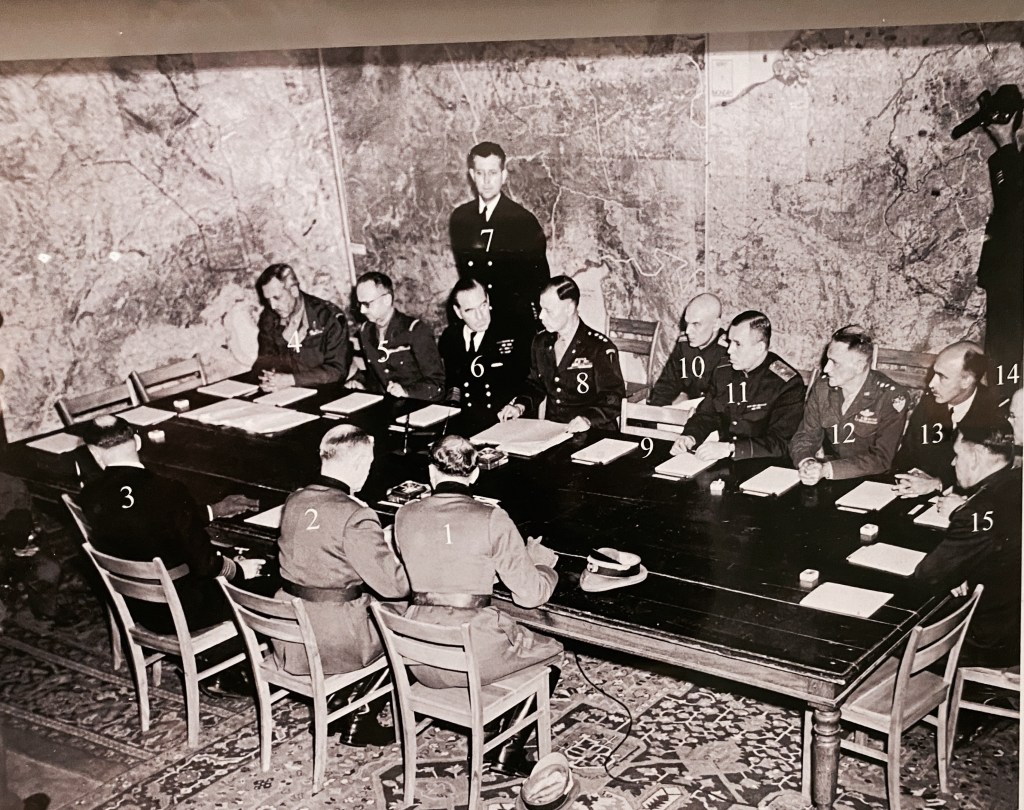
In Rheims, in the Map Room of the Supreme Headquarters of the Allied Expeditionary Force, at 2:41 am on May 7, 1945, General Alfred Jodl, leader of the German Armed Forces High Command, signed documents of unconditional surrender ending World War II in Europe. Although General Dwight D. Eisenhower was present in the building, he refused to meet with the Germans until after the surrender was official.

Imposing Cathedrals
Two ancient Roman Catholic cathedrals attest to Rheim’s history. Notre-Dame de Reims was founded in the early 5th century. In this church, Bishop Remigius, who was later canonized and became known as Saint Remi, baptized Clovis I the king of the Franks in about 496 — an event that led to the conversion of thousands to Christianity and to a tradition of coronations in the cathedral. At least twenty-five kings of France were crowned in Notre-Dame de Reims—including Charles VII in 1429 with Joan of Arc attending.
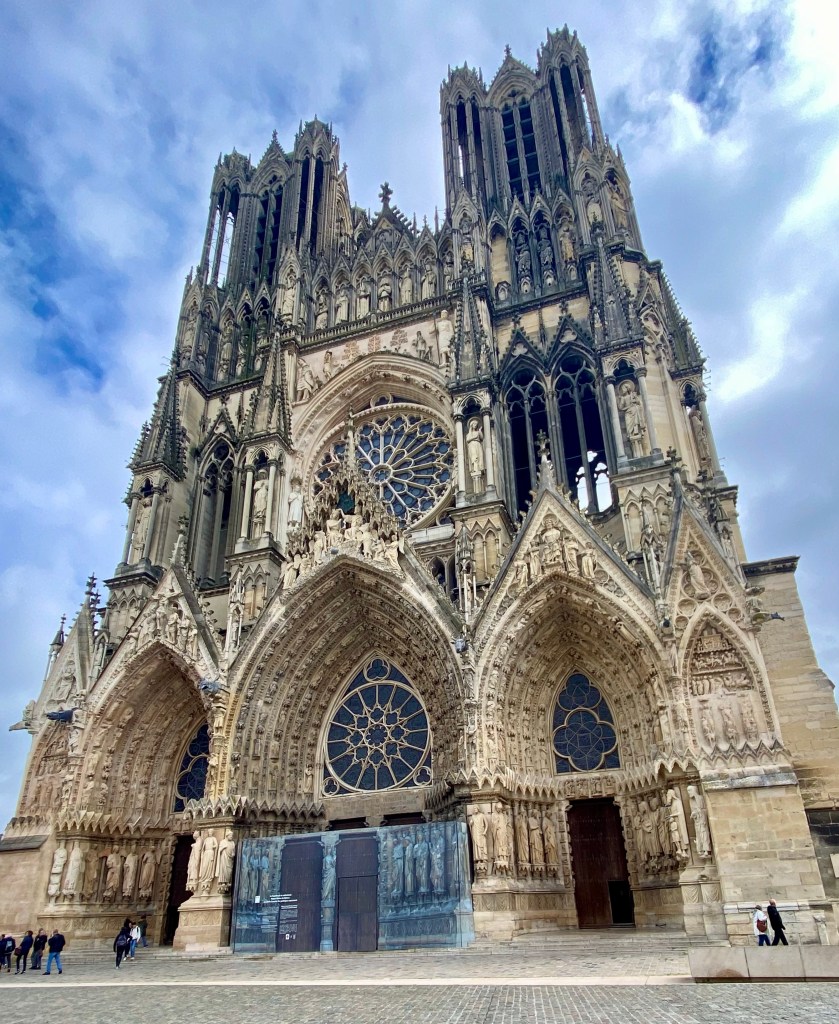
But like so many of the oldest churches, fires and warfare destroyed much of the original structure and the magnificent edifice we see today is the result of centuries of rebuilding, renovation, preservation and restoration — in this case, upon a foundation of Gallo-Roman baths built by Emperor Constantine.

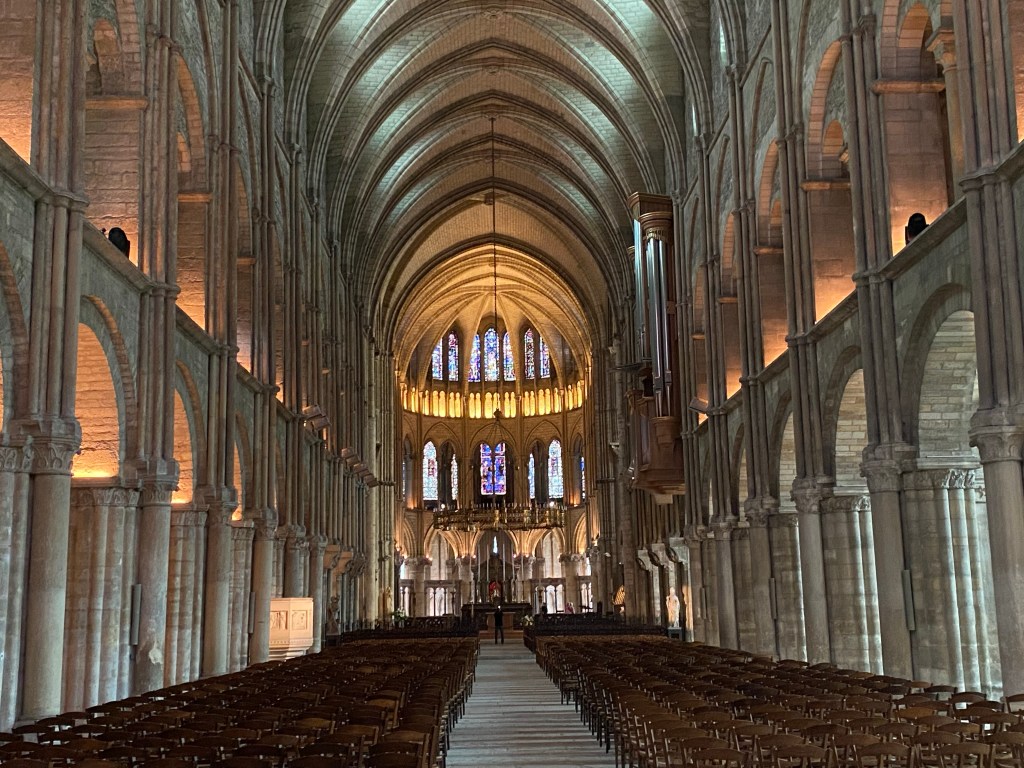
In the eleventh century, the Basilica of Saint-Remi was built on the site where Saint Remi had been buried in 553. It was the abbey church of a community of Benedictine nuns who were in residence there until the French Revolution. In World War I, it was heavily bombed. The restoration of the ruins, which was championed by Henri Deneux, an architect with an eye for meticulous detail, took forty years. Today the vitality and contemporary relevance of the basilica are bolstered by an active Catholic congregation and regular worship services.
In eastern France, there is no escaping the ravages of World War I. Belleau Wood, Chateau Thierry, the Marne, and Verdun are all names of battlefields of the bloodiest global war in history. In an earlier episode, we expressed the profound sadness we felt when visiting and in some cases revisiting sites such as these. See Posting dated October 14, 2022, “In Flanders Fields the poppies blow between the crosses, row on row, . . .”
Even so, we were drawn to visit two particular places that honor the patriotic dead: the Meuse-Argonne American Cemetery and Memorial and the Douaumont Ossuary.
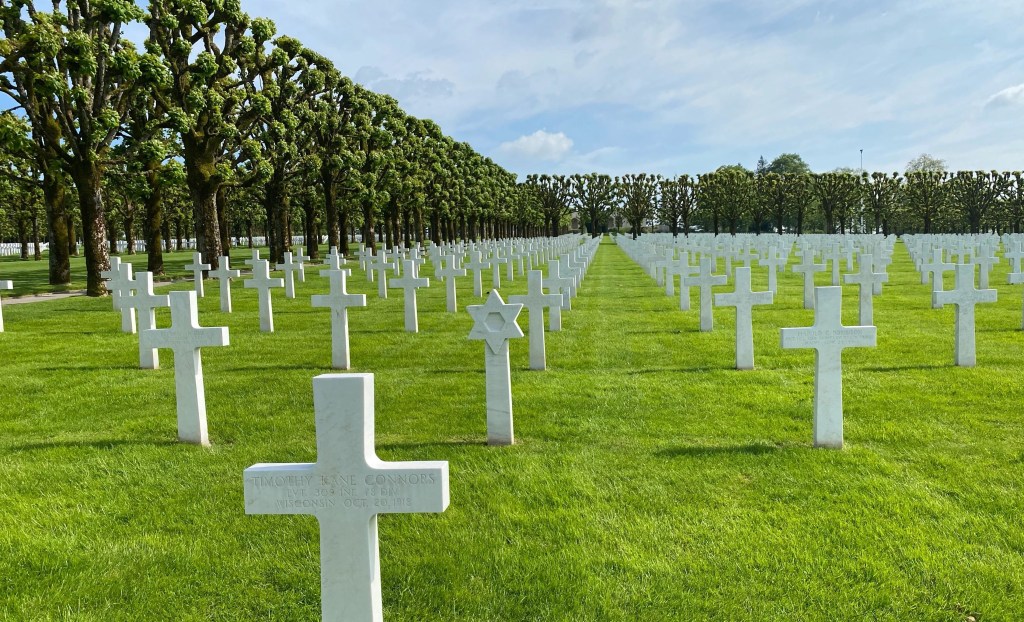
This cemetery is the final resting place for 14,246 of the 116,516 Americans who died in WWI. As we walked along the rows and rows of white crosses and Stars of David, we noticed that the date of death on nearly every marker was during the autumn months of 1918. Ironically, the armistice that ended the fighting was declared on November 11, 1918.
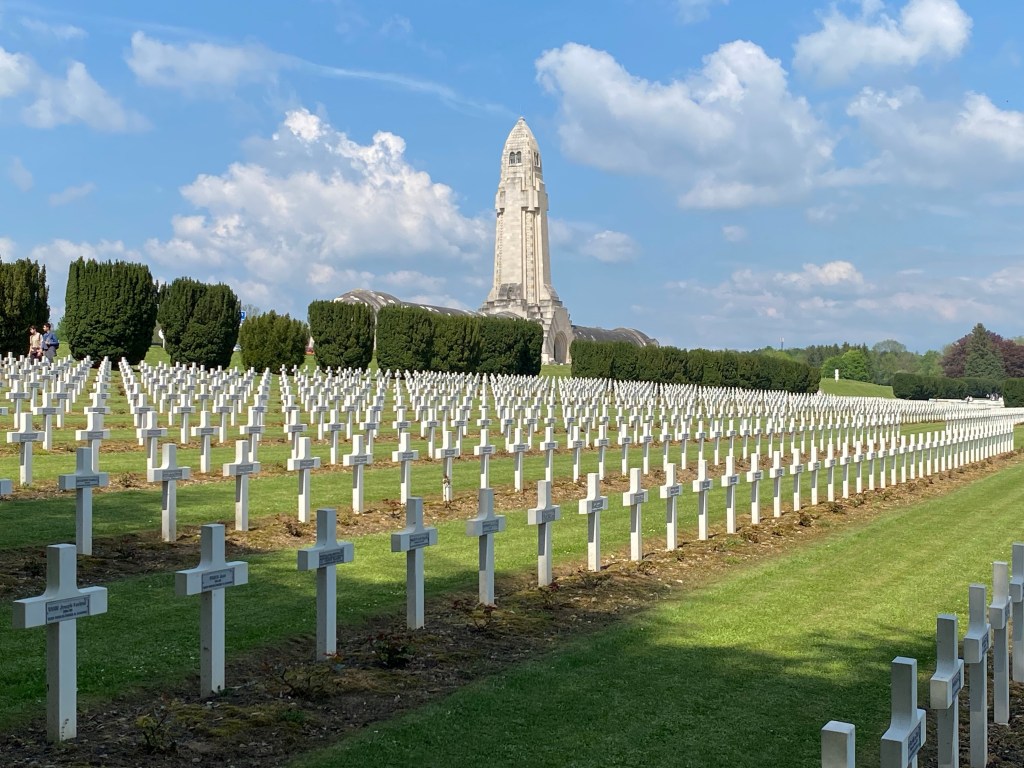
The tall rocket-shaped monument and its lateral wings contain the skeletal remains of at least 130,000 soldiers, from both the Allied and the Central Powers forces, who died on the Verdun battlefield. After the armistice was declared, Charles Ginisty, Catholic Bishop of Verdun, had the piles of unidentified bones gathered from the field and placed in the memorial built to shelter them. As one walks along the side of the monument, small windows allow the curious to gaze into the interior to view huge stacks of jumbled bones. The cemetery in front of the monument contains the graves of an additional 16,000 French soldiers.
Ghost Villages
While driving on, we happened upon Douaumont, one of nine villages completely destroyed during the Battle of Verdun in 1916.

The barrage of artillery shells spent during 300 days and nights contaminated the earth so thoroughly that France declared the area a Red Zone saying the villages had died for France and could never be rebuilt.
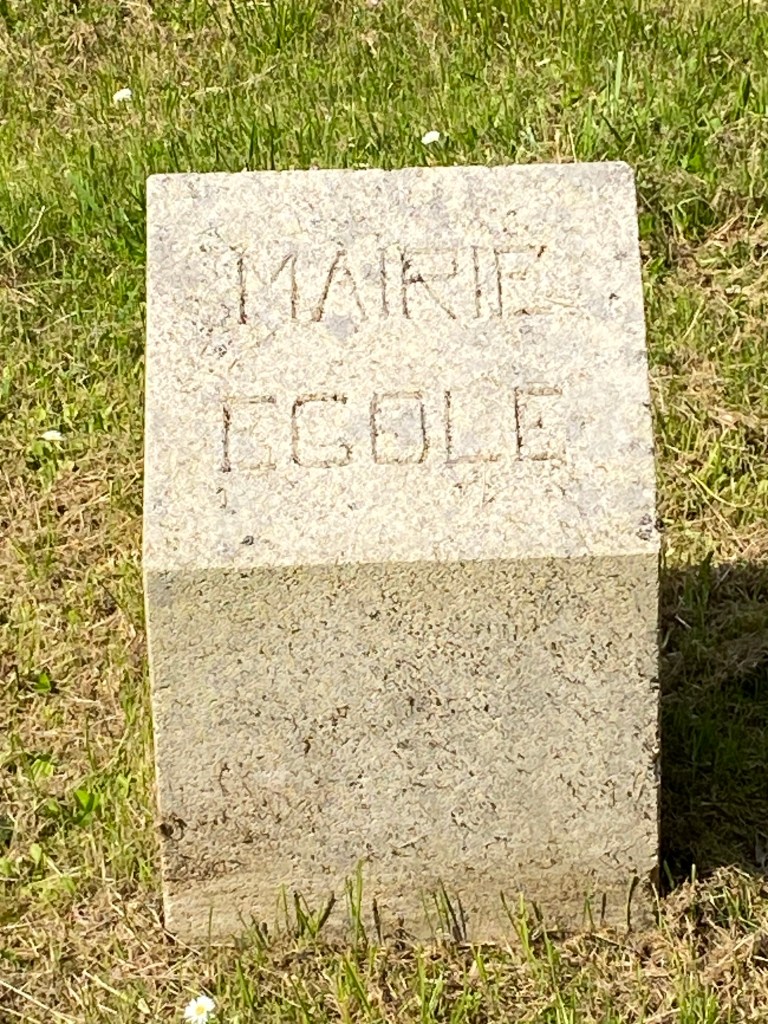
A stone pillar marks where the Douaumont city hall and the local school stood.
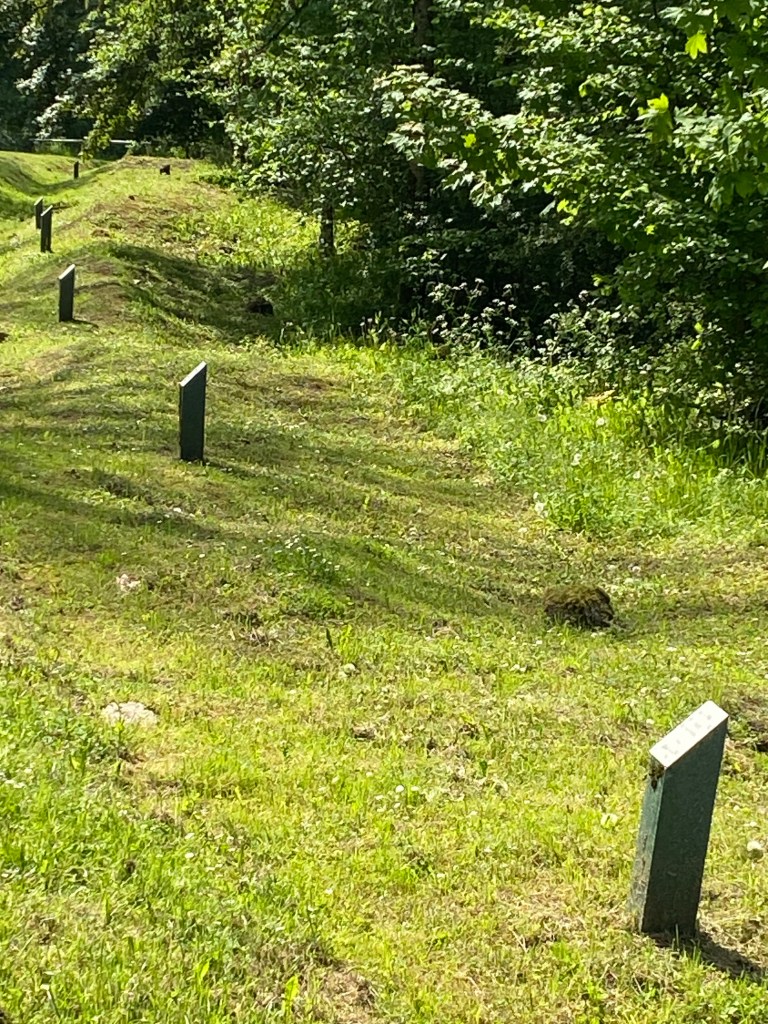
Individual markers tell us whose house and what business occupied each spot.
Eager to shed the doldrums caused by an overexposure to the sorrowful realities of war, we decided to shake things up and run away to another country.
The southern border of Luxembourg, one of the smallest countries in the world, lies only an hour away from our gîte in Watronville, France. After booking a hotel in Luxembourg City on the internet, we hopped in the car and sped along the fastest route.
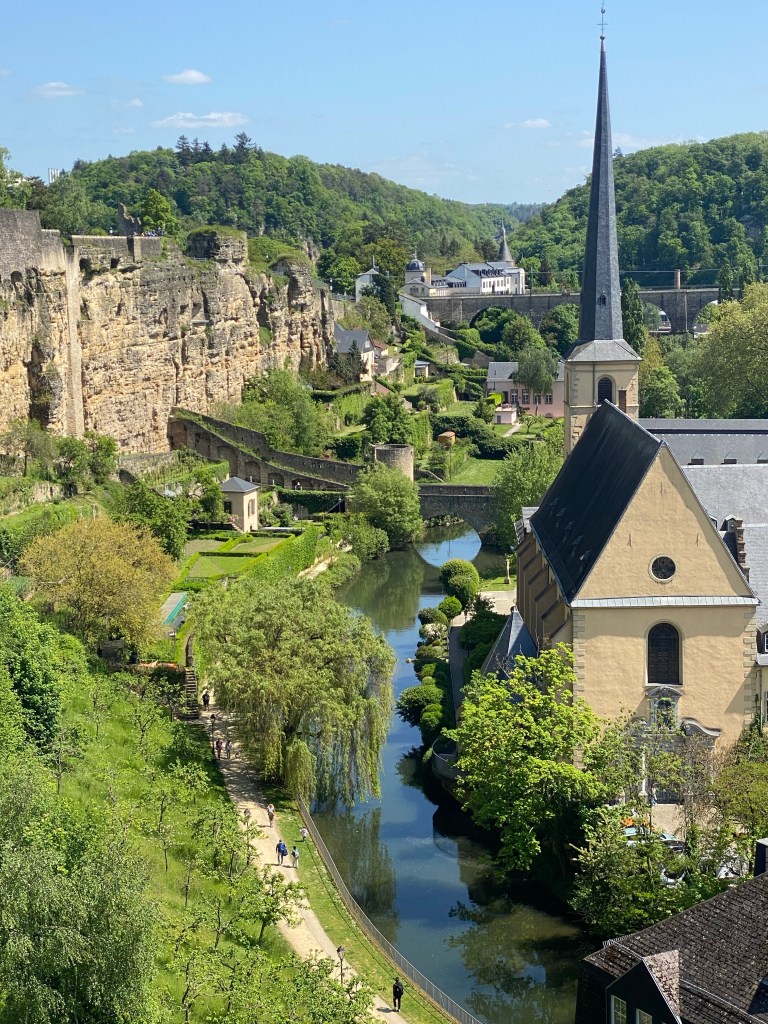
Marking the site where two Roman roads met on feudal lands, Luxembourg City flourishes as a banking and administrative center. In 2022, it had the highest GDP in the world. Most impressive to us was the fact that all public transportation is free — for everyone. Trains, buses, and tramways. The remarkably modern and efficient tramway served us well within the city. And when we boarded the train for the fifty minute journey to Trier, Germany, to visit their oldest church, the High Cathedral of Saint Peter, our round trip first class ticket cost only 5€ to compensate Germany for travel within its border.

Many times in the past we’d been within striking distance of Metz, and once we were back in France, we felt obliged to pause and explore the town. We discovered a vibrant, sophisticated city with a magnificent Gothic cathedral, an immaculate indoor market offering every sort of food and drink, and plazas edged by restaurants and bars filled with folks enjoying a beer or just mingling with friends.


Faced with two nights without reservations, Diane began phoning from the car and searching the internet while we raced toward the mountainous and heavily forested Vosges region near the German border. We weren’t aware that the previous day was a major holiday, the Feast of the Ascension, creating an opportunity for the French to enjoy a long weekend by bridging the gap and taking Friday off. Time after time Diane heard “there’s no room at the inn”. Finally, a kind host named Elise rescued us by confirming a room in her guesthouse for the next night and referring us to a simple hotel in a nearby tired-looking spa town for the present one. We were grateful for the clean room, the nice people, and the restaurant down the street that stayed open late.
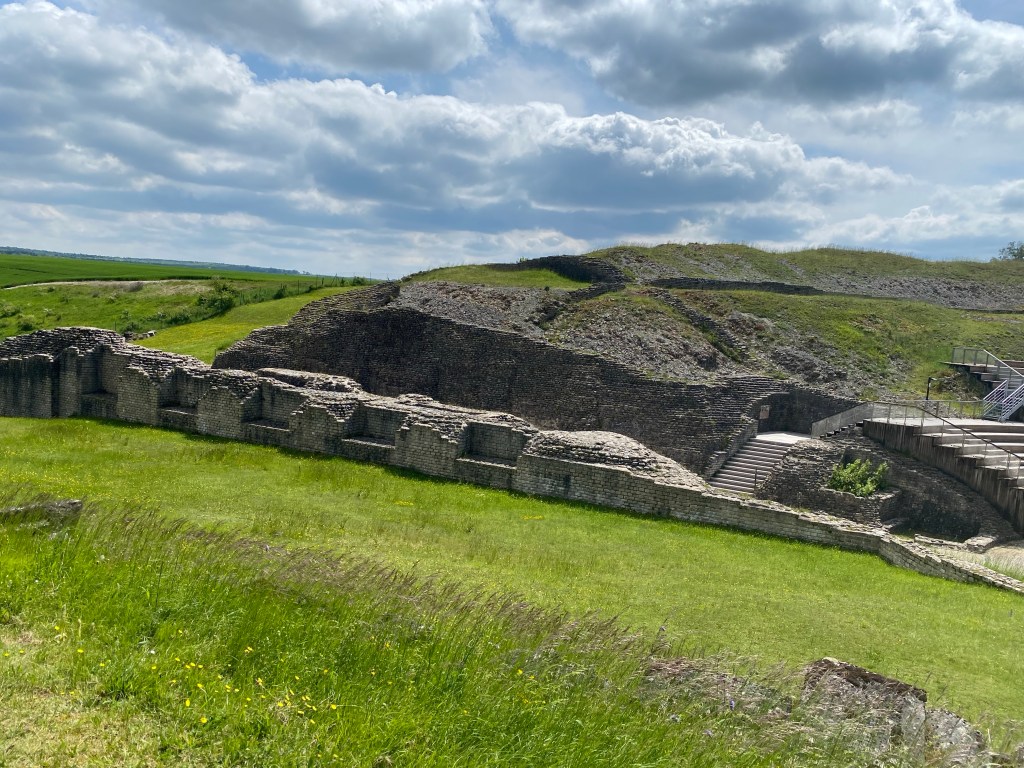
Almost accidentally, we learned that Saint Joan of Arc, patron saint of France, was born in the Vosges town, Domrémy (renamed Domrémy-la-Pucelle to officially add St. Joan’s title, the Maid of Orleans). On our way to visit the village, we came upon the ruins of one of the largest Roman amphitheaters in France.
Sainte-Jeanne-d’Arc basilica overlooks the Meuse Valley and Domrémy, the village where Joan was born to tenant-farmer parents in about 1412. It was built on the site where Joan heard divine voices and in its crypt it houses the statue of Our Lady of Bermont before which she often prayed. Brilliantly designed monumental mosaics depict the life of the revered local maiden.


Tomorrow we will head east toward Alsace-Lorraine and the rented farmhouse that awaits us. Tonight, though, we happily relax in Elise’s country house, feeling so grateful that she took us in.
Renie and Diane, May 20, 2023
Posted July 19, 2023
 Travel in Le Troisième Âge
Are you back in France again? The last I heard you were in Kansas City a week ago.
LikeLike
Have enjoyed your trip (our trip) through beautiful France. Truly an impressive experience!
LikeLike
Excellent writing. I hope you combine all of the blogs into a book.
LikeLike
You have had an amazing trip, and I have enjoyed every post.!
LikeLike
I have so enjoyed your year in France vicariously through your excellent writing and photos. Thank you for the gift!
I’m slowly watching recordings of Tour de France 2023. It is a strange race this year, but the beauty of the countryside and villages never disappoint. Drones have been used for past few years for much of the scenery footage making it better than ever.
Love and appreciation to both of you,
Kathleen
LikeLike